





Where Light Shapes Space
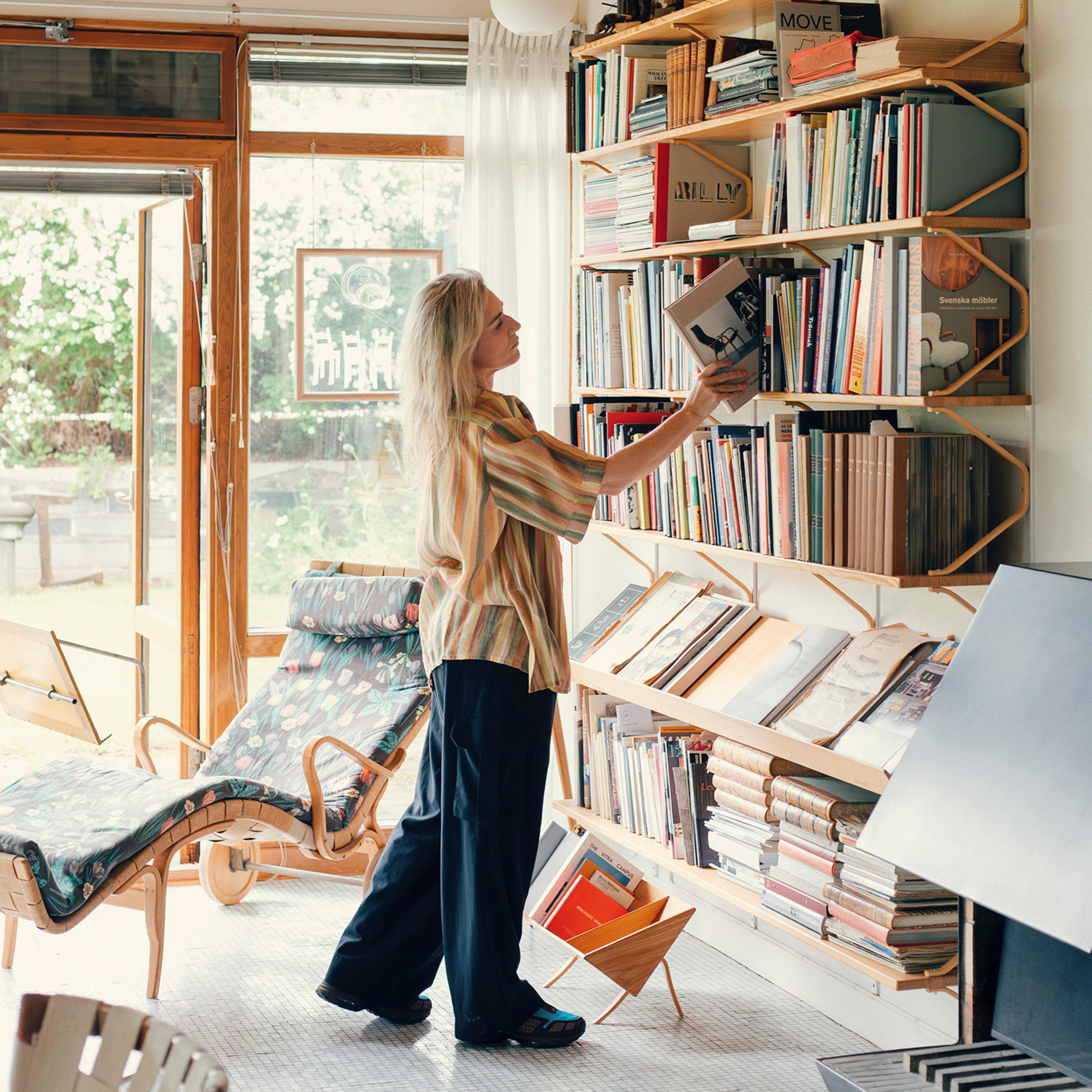
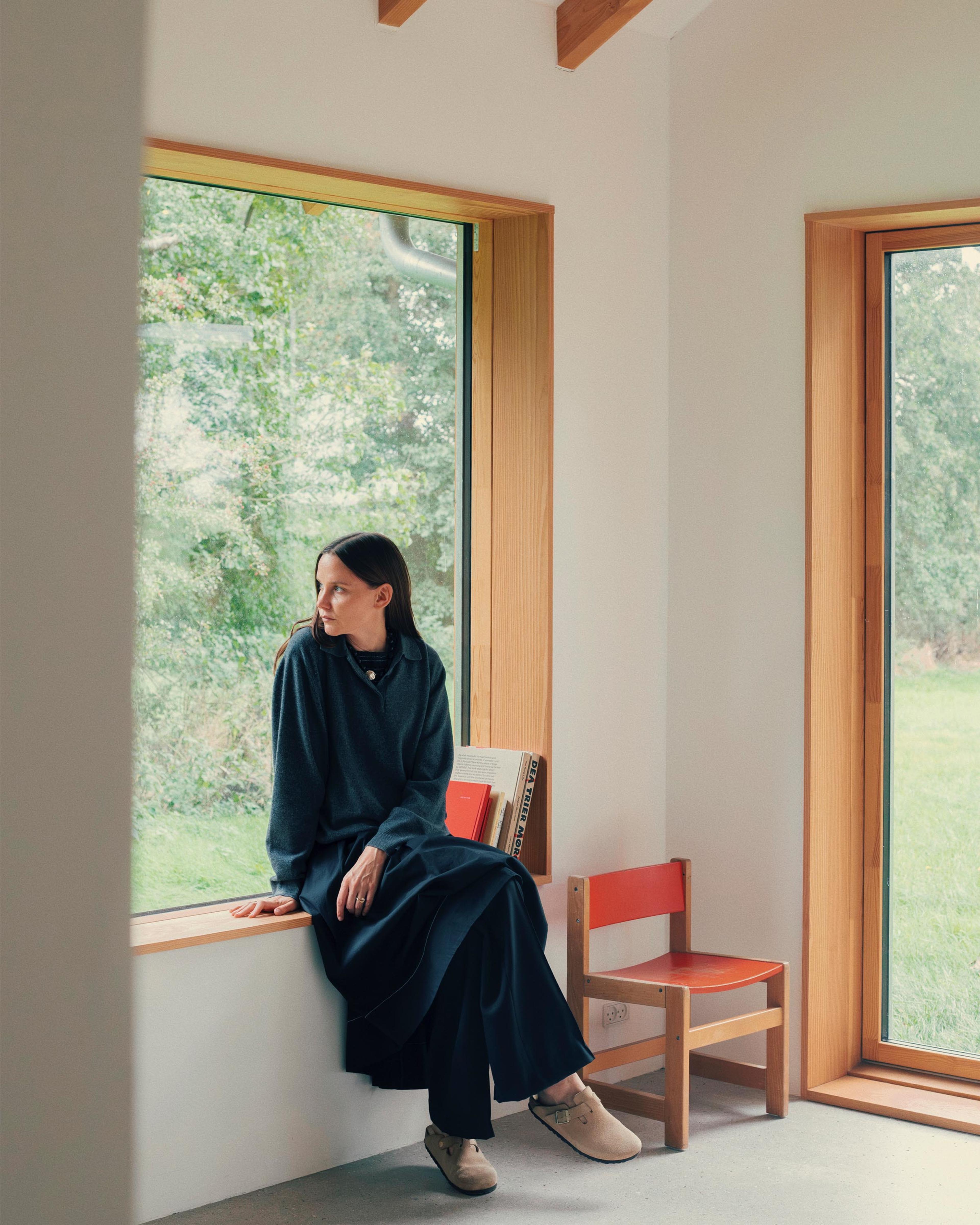
We visit Caroline Vogel Sillesen, an architect working at the intersection of building and jewellery, at the family’s summer house in Skibby. Here, she spends her days with her husband, architect Thomas Vogel, their son Vincent, and their dog Otto. In their daily life in Nørrebro, Copenhagen, the city’s intensity sets the pace. Out here in the countryside, life feels slower, more spacious, with nature’s soundscape as a constant companion. The summer house was conceived as a counterpoint to daily routines, a place where rhythms soften and relationships take centre stage.
Caroline graduated from the Royal Danish Academy of Architecture, specialising in art and architecture. Alongside her work at her studio atelier axo, she runs the jewellery brand Corali, where her sensitivity to materials, scale, and detail merges with her architectural approach.

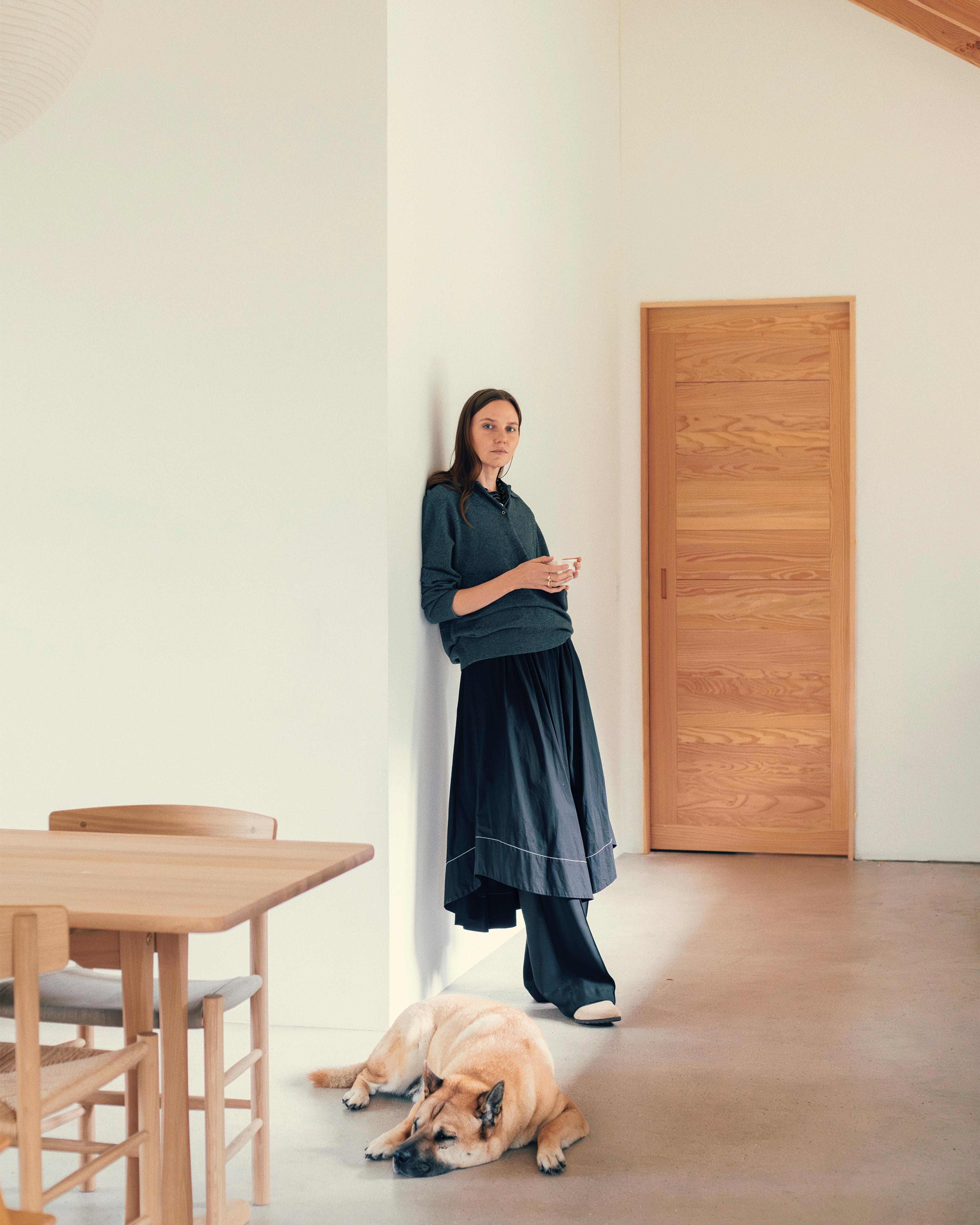
“ Light is a great source of inspiration for us; how it falls into a room, shifts the atmosphere, and makes surfaces and forms appear in new ways. It is something we spent a long time exploring in the house. ”
Caroline Sillesen




Completed in 2024, the summer house stretches across a slope where marshland meets open fields. The 22-metre-long structure acts as an architectural threshold between two contrasting landscapes. Caroline explains:
“The elongated form keeps you constantly connected to the surroundings, with profoundly different views. To the east, the morning sun slips through the dense, protected marsh, filtering through birch and mirabelle trees. Here, you are wrapped in greenery. To the west, only golden oat fields and blue sky stretch out: the only interruption is the church tower and the treetops of the small village beyond the fields.”
A terrace cuts across the house, dividing the main house from the guest wing and forming the home’s social backbone. Partly covered and partly open, it is directly accessible from bedrooms and bathrooms, blurring the boundary between inside and out.
“The house is divided by a long transverse terrace, which in plan gives it the form of a cross, separating the main house from the guest house. We designed it with to allow us to be in nature, together.”
The family’s daily rituals follow the rhythm of the landscape, often beginning with an outdoor bath – summer and winter alike.
“It’s extraordinary to wake up alongside the deer. They sleep in our garden and around the marsh, and just before sunrise, they move through the garden and out into the fields to graze.”
A tribute to Utzon
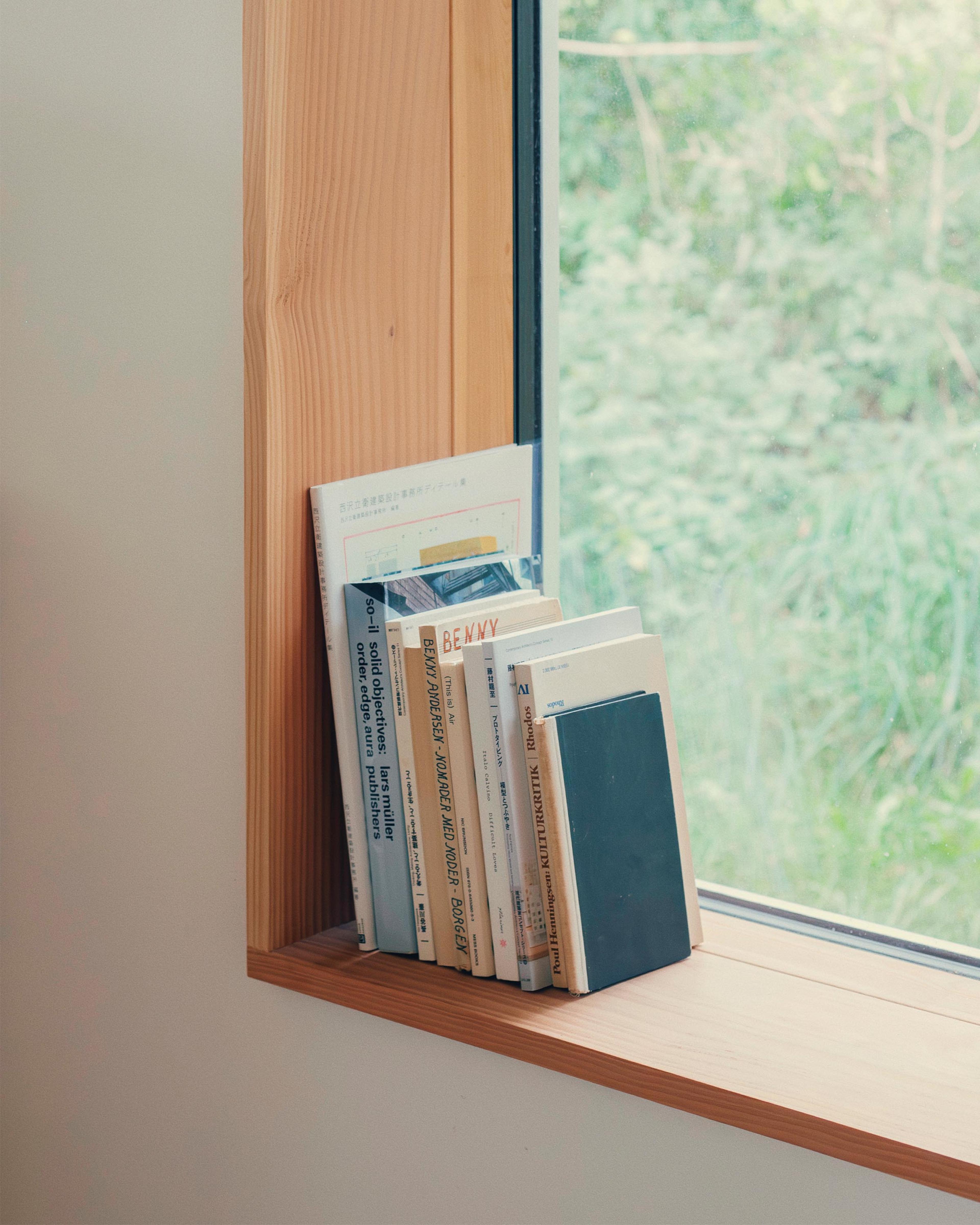
Light was a central inspiration during design and daily life. Before construction, Caroline and Thomas spent two years studying how sunlight moved across the site. That research informs every spatial experience today. To capture the rhythm of daylight and nature’s changing expressions, the couple worked meticulously on window placement and proportions. One window carries a personal architectural reference from a family house in Mallorca:
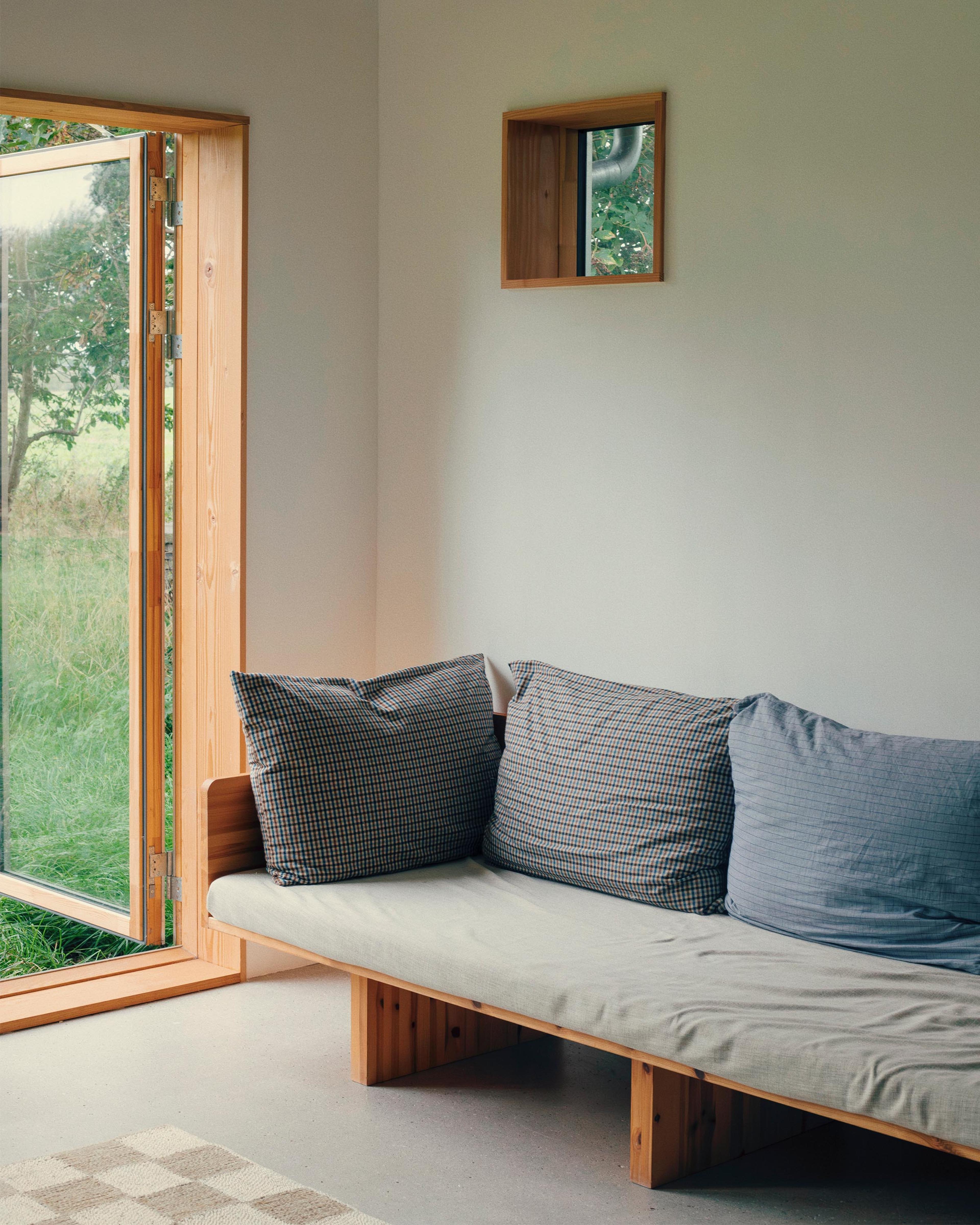
“We have a small corner window in the living room facing west. It is inspired by Jørn Utzon’s magnificent window in the living room at Can Lis, which creates a beautiful afternoon light strip. Ours is different – partly because we are in Hornsherred, partly because of its form and position. We designed it to paint a small composition of light on the opposite wall, which has no other windows. This light work dances across the living room, changing with the seasons. Such a simple gesture, yet profoundly meaningful.”
Architecture becomes more than a physical framework; it becomes an active participant, inscribing the daily and yearly rhythms directly into life.

Comfort and Craft
The interior mirrors the precision of the architecture. For Caroline, understanding the place comes first:
“The most important thing is to listen to the site. What is happening there already, and what needs to be added? Comfort and function are the foundation, and everything else builds from there. It’s the same with jewellery: you simply cannot make an earring that weighs eleven grams, no one could wear it.”
Furniture reflects the couple’s respect for craftsmanship. Several pieces have been made by them, while otheres the house have been made by them, while others are chosen woth fascination and care.
“Our home is where we can experiment and test things. We built some of our furniture ourselves, and when we select other pieces, there is always admiration and humility attached.”
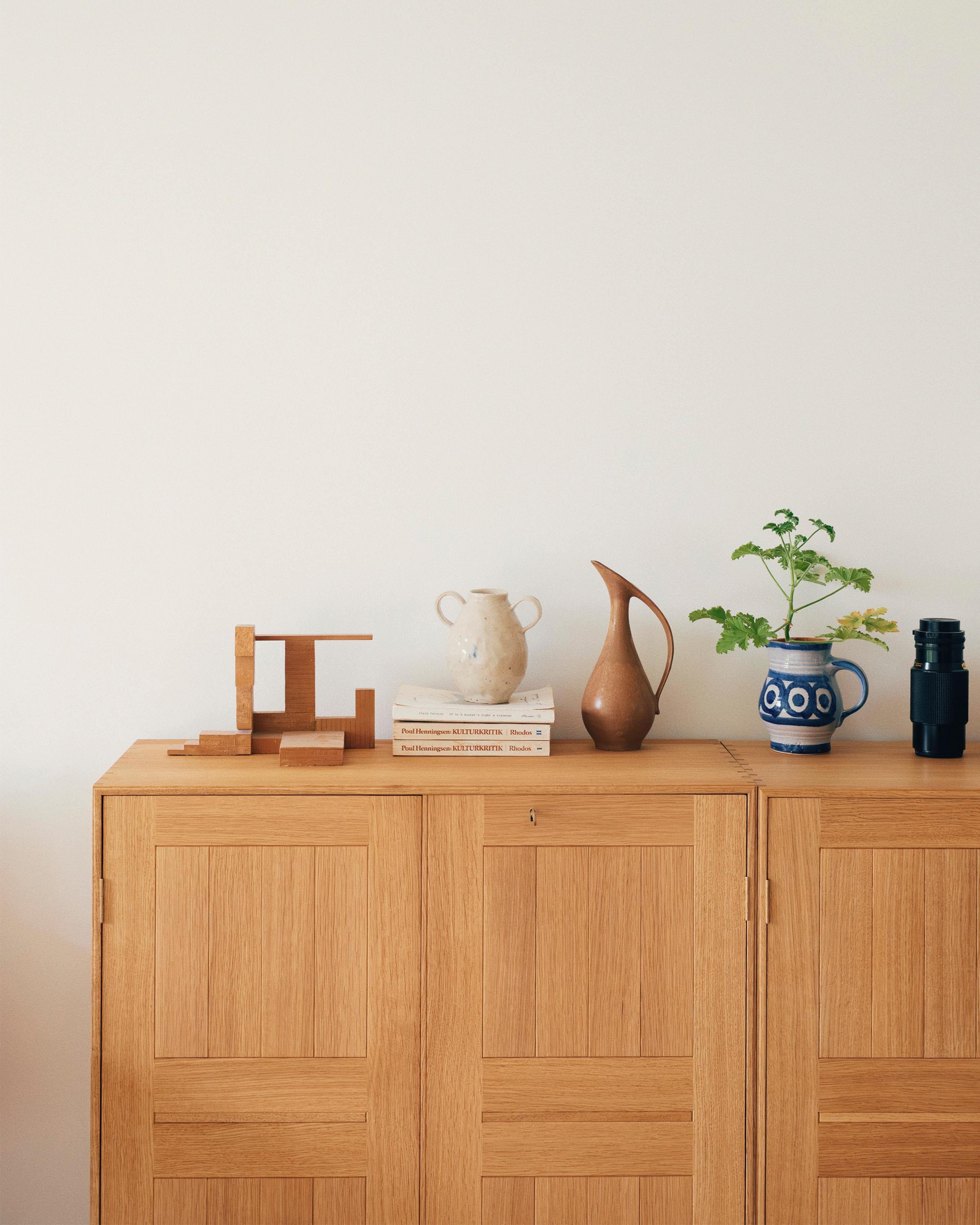
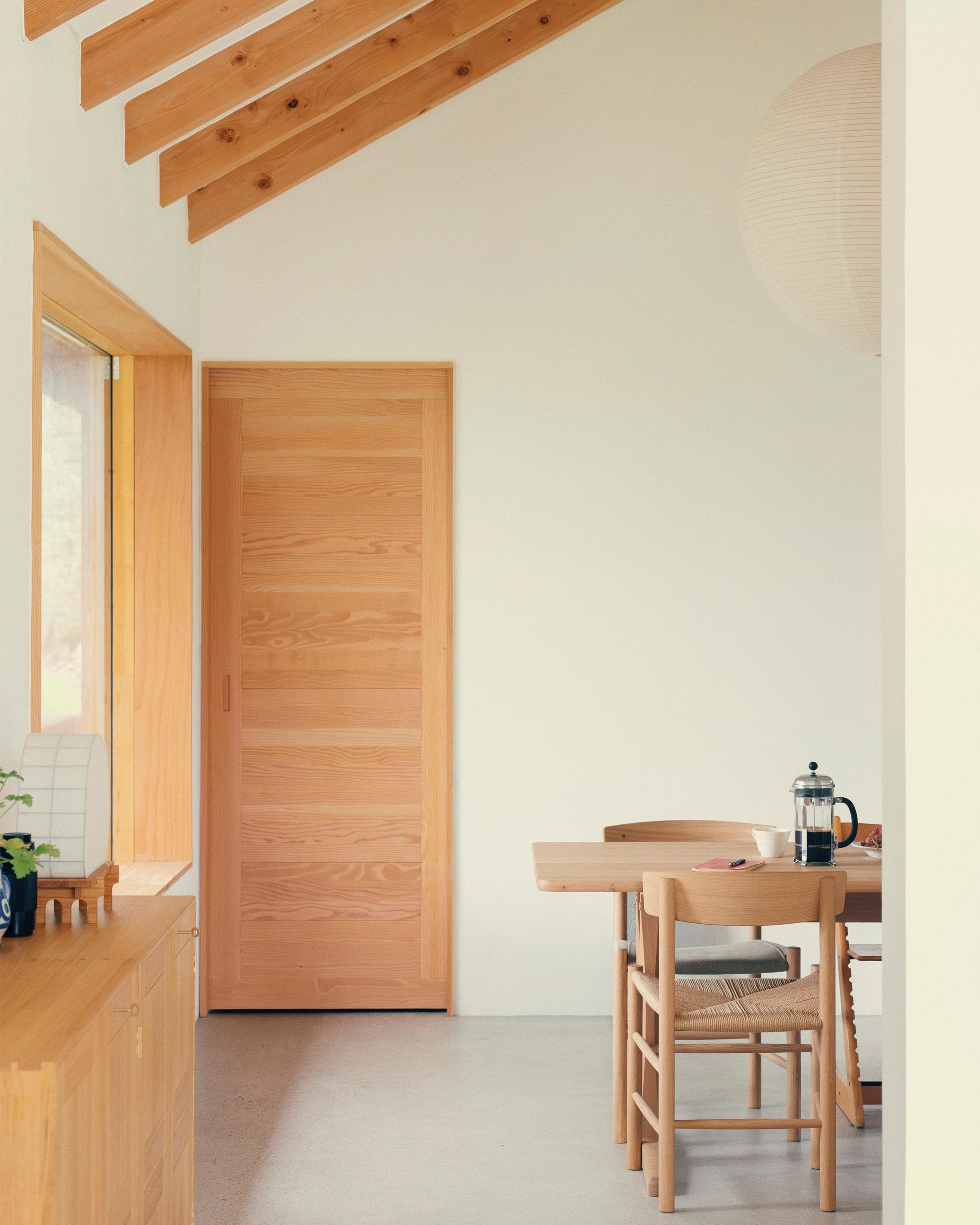
In the dining room, a Børge Mogensen C18 Table sits among J39 chairs, while Mogens Koch Bookcases invite slow reading in rhythm with nature outside. Selection matters more than quantity.
Above all, the summer house in Skibby frames presence: nature steps forward, humans step back, and inside and out enter a quiet conversation. It is precisely this approach that defines Caroline’s architectural practice.



Shaping Spaces
Through a series of narratives, we explore inspiring spaces, delve into architectural history topics, explore the essence of good design, and celebrate the cultivation of unique atmospheres.







1 of 6