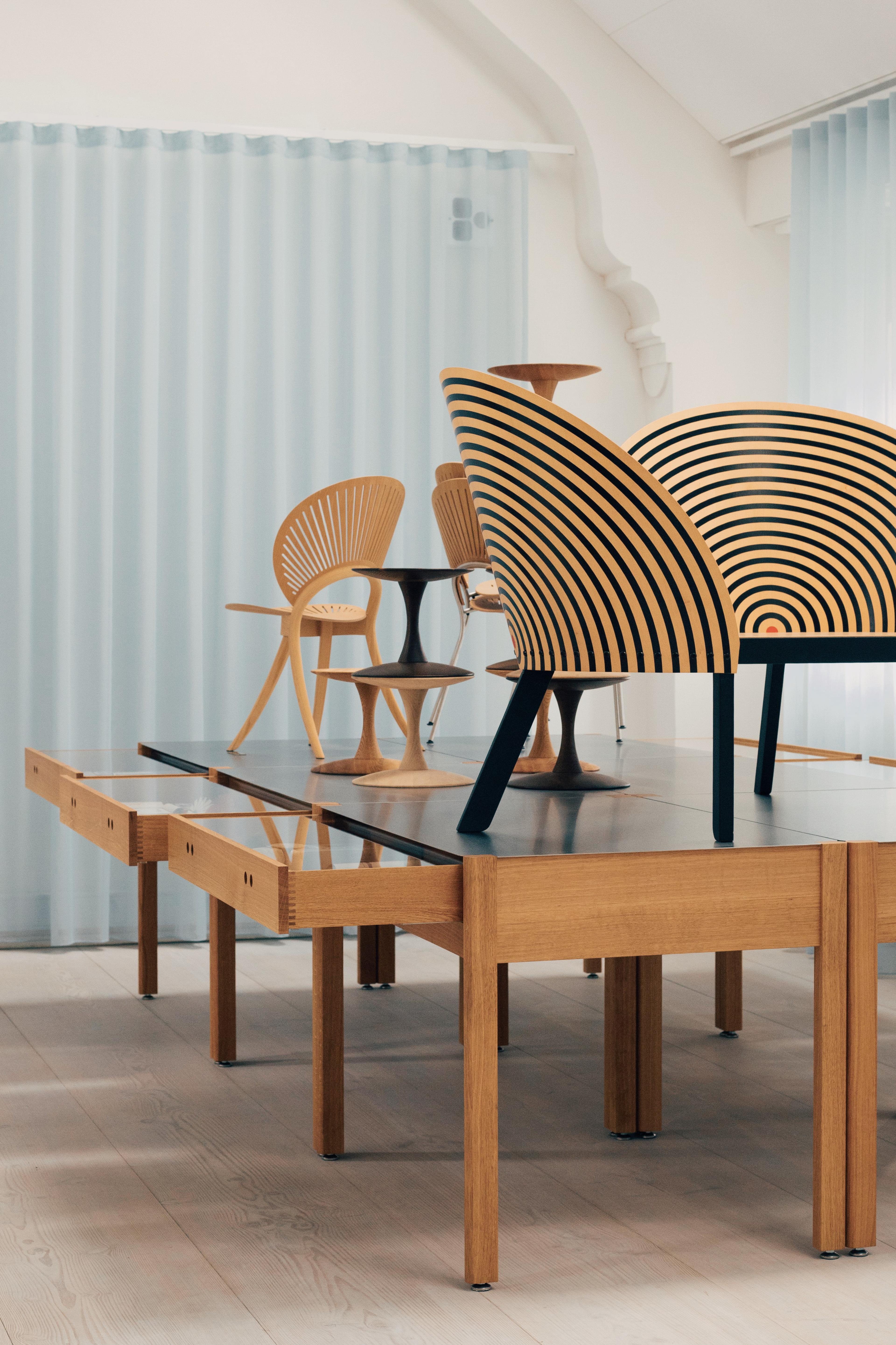
Fredericia: A Chronicle of Danish Design
Fredericia: A Chronicle of Danish Design explores nearly a century of furniture design through iconic works, contemporary perspectives and an exhibition architecture designed tailor-made for exhibiting the pieces.
The exhibition explores Danish design through four interconnected themes: craftsmanship, progress, relevance and viability. Together, they reveal how a design tradition built on honesty, functionality and quality continues to evolve and resonate across generations.
The Exhibition
Fredericia: A Chronicle of Danish Design presents a carefully curated timeline of furniture spanning almost a hundred years of Danish design history.
Beginning in 1928 and extending to the present day, the exhibition reveals how successive generations of designers have built upon shared values while responding to changing cultural, social and material conditions. Rather than presenting design history as a linear narrative, it invites visitors to explore the connections between past and present, asking how Danish design continues to evolve while remaining rooted in its traditions.
More than a display of furniture, the exhibition tells the story of Danish design as a cultural movement shaped by craftsmanship, collaboration and a deep understanding of everyday life through the lens of Fredericia, a company established in 1911, whose heritage is characterised by indisputable classics and enduring collections that have sustained decades of consistent production.

Exhibition Design
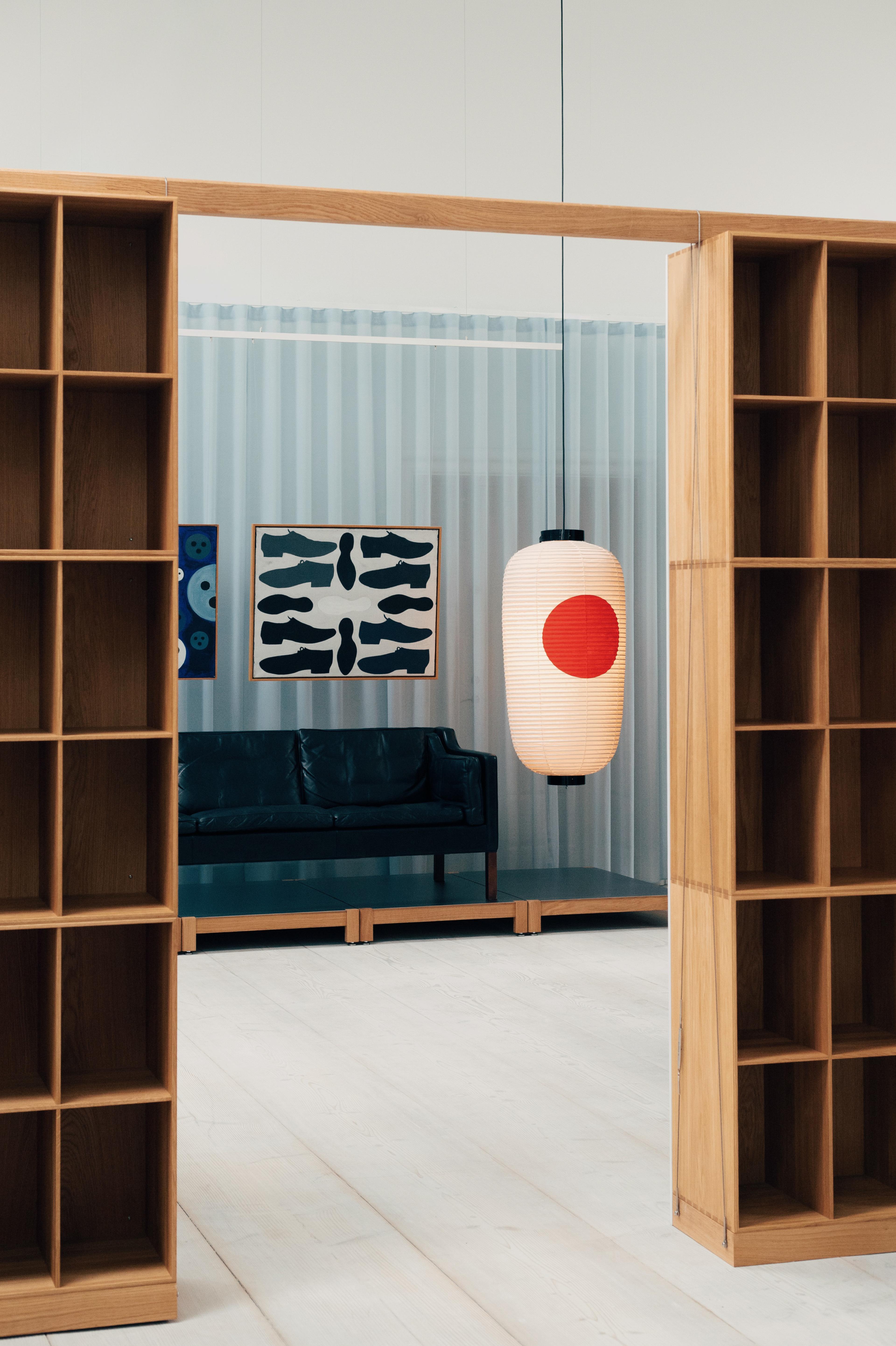
The exhibition architecture is conceived as an extension of the collection itself.
Designed by Bruun and Bjerrum Beukel, the modular display system draws inspiration from the work of Mogens Koch and Børge Mogensen, referencing their principles of functional simplicity and adaptable construction. Crafted in Denmark from oak and steel, the architecture embodies the same commitment to quality, longevity and material honesty found in the furniture it supports.
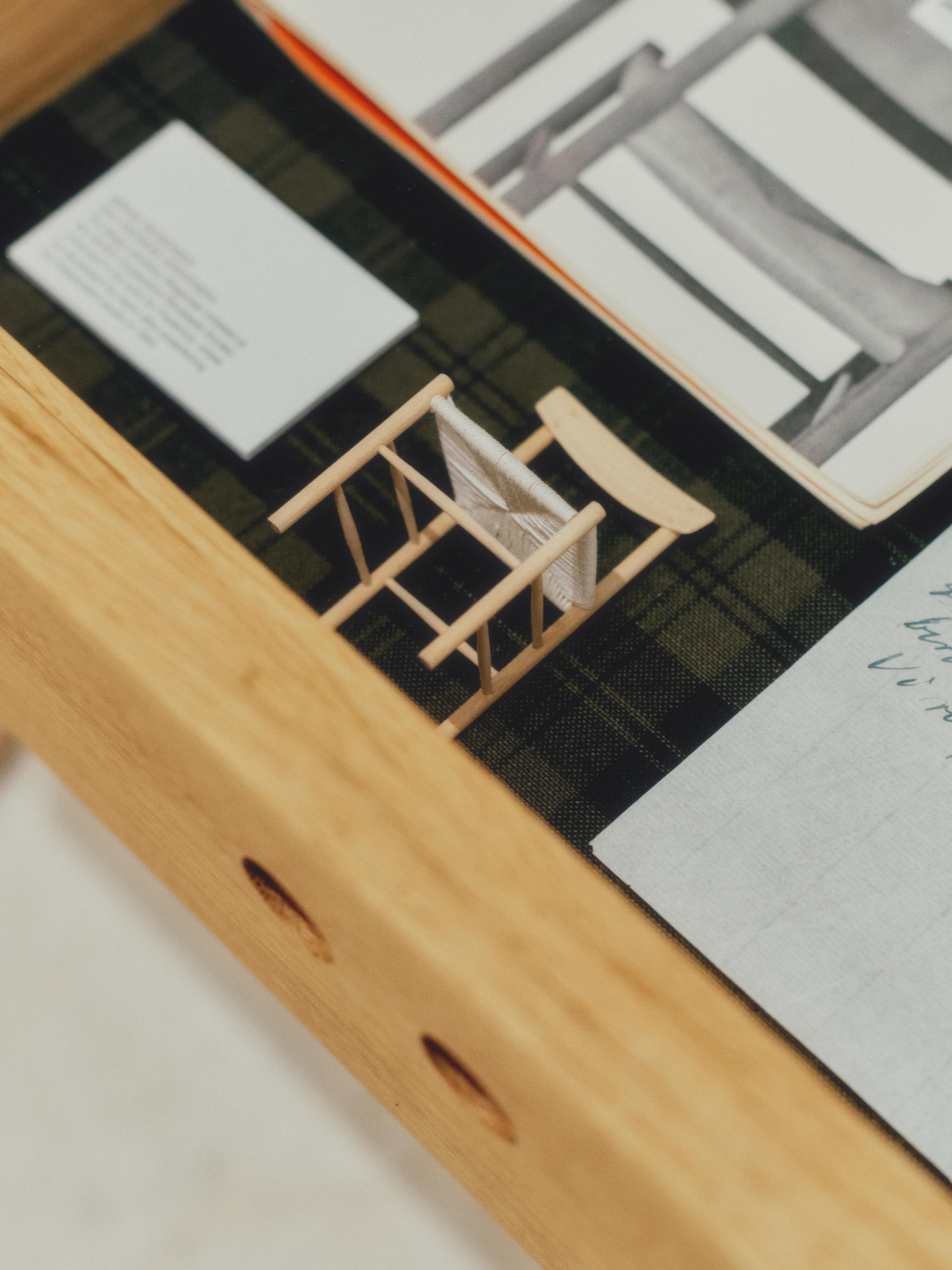
Integrated drawers encourage visitors to engage with the stories behind each object, creating opportunities for deeper exploration and discovery.

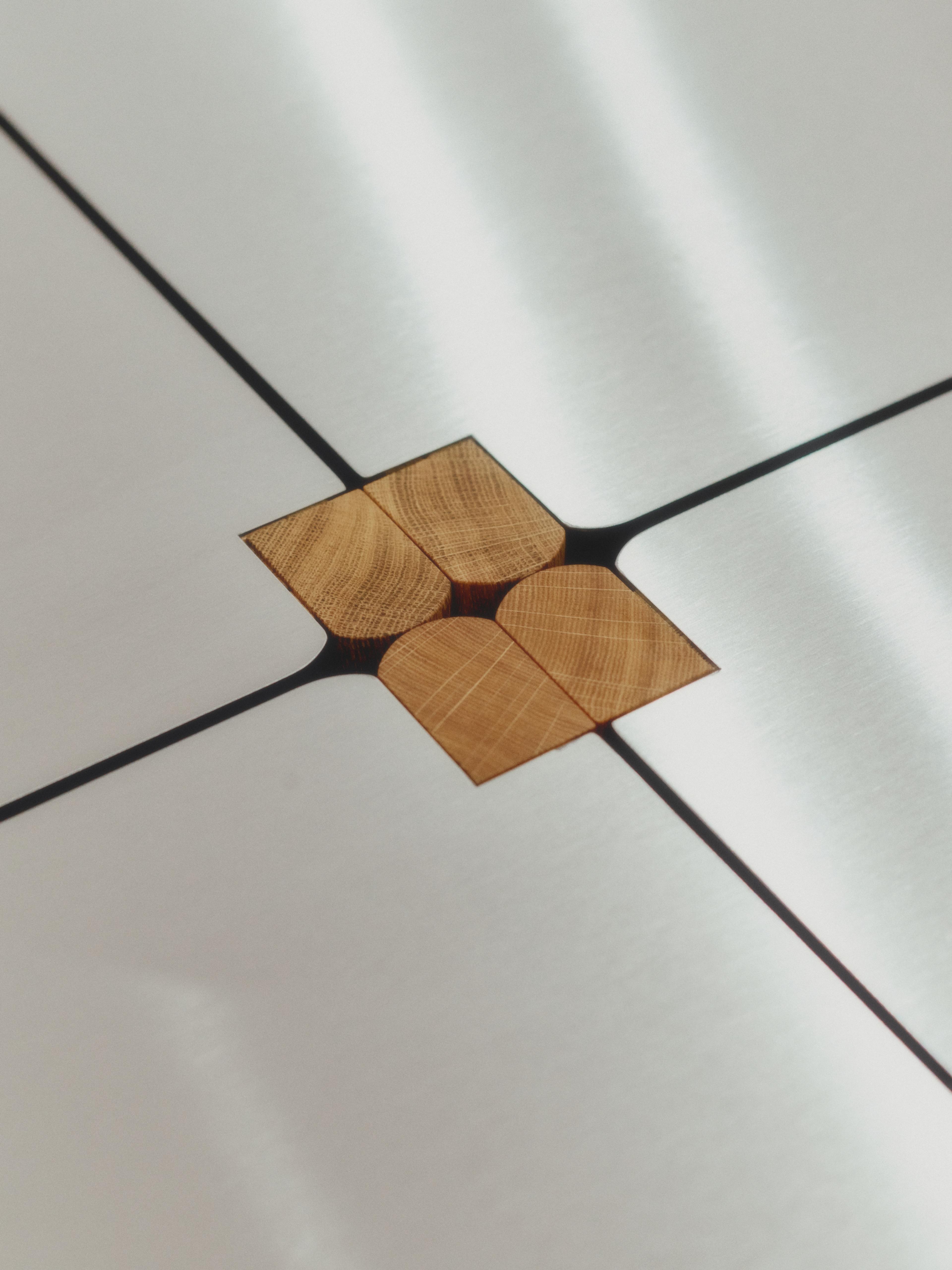

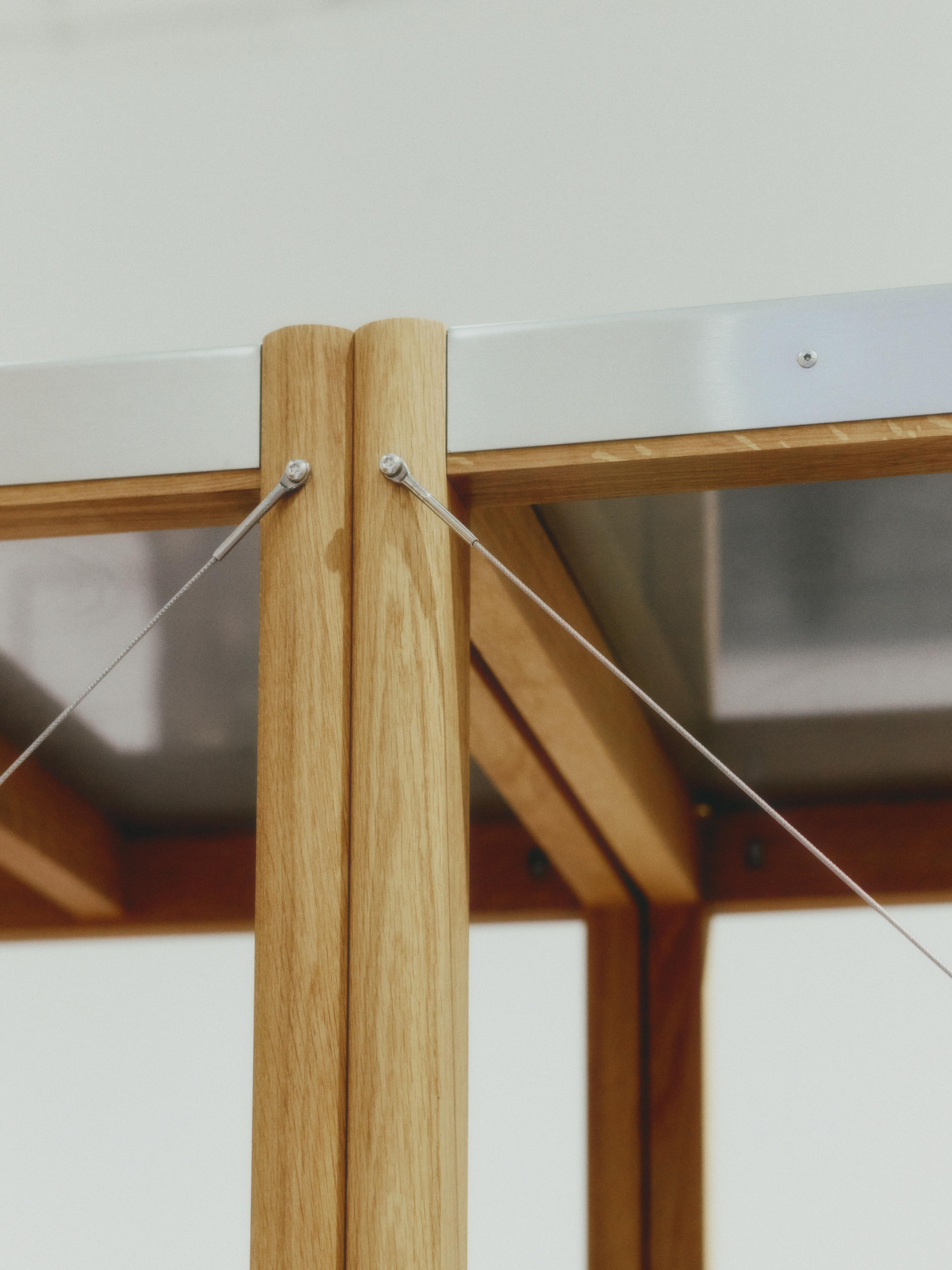

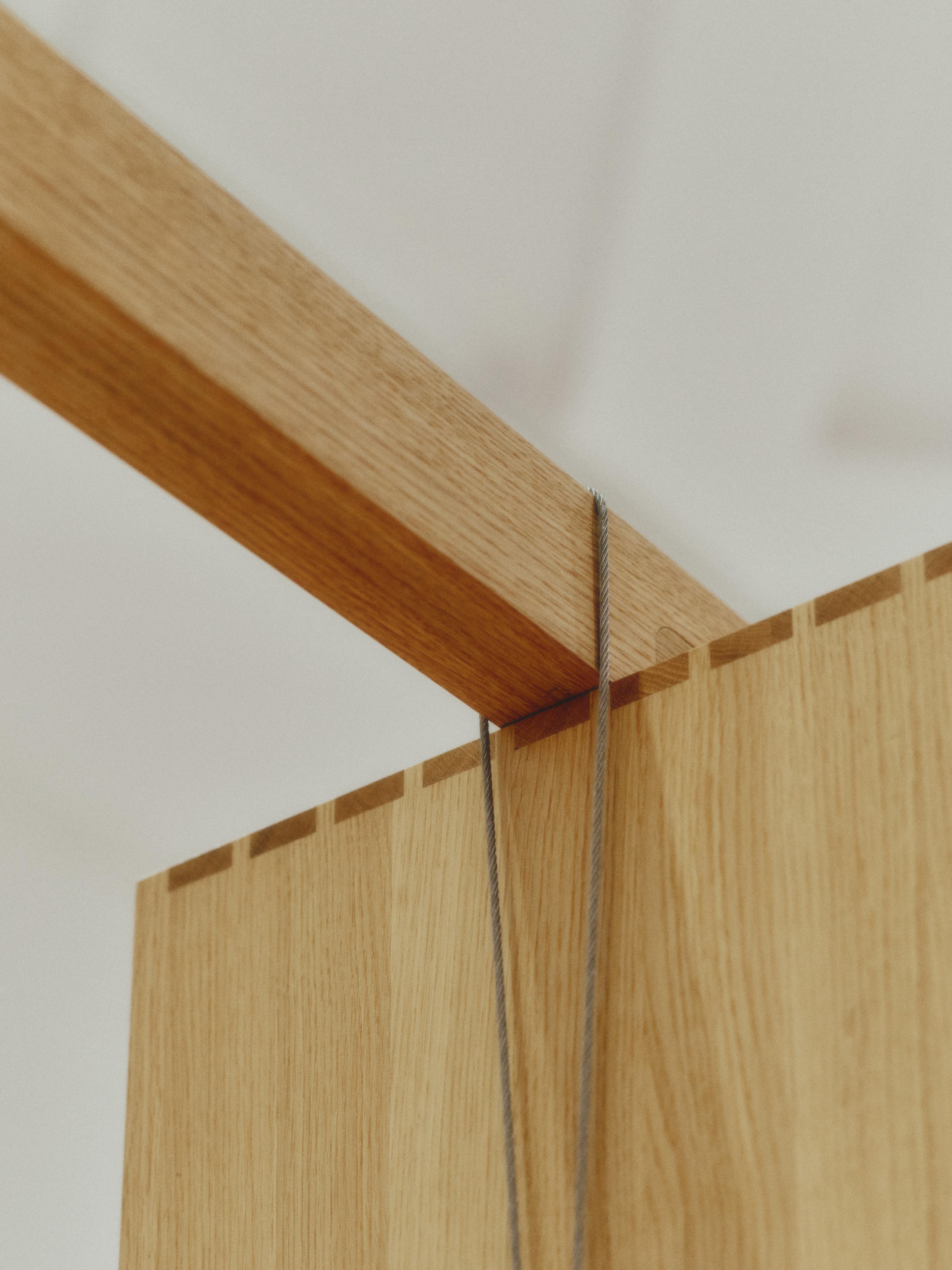
Its modular construction enables the exhibition to be assembled, adapted and reconfigured for museums and cultural institutions around the world. This flexibility allows each presentation to respond to its host venue while maintaining a consistent curatorial identity.
By prioritising durability, adaptability and reuse, the exhibition offers a more responsible approach to exhibition design and significantly reduces the waste associated with temporary installations.



A Lasting Record
Alongside the exhibition, Fredericia: A Chronicle of Danish Design is available as an exclusive publication. Bringing together archival drawings, historical photography and stories from the Fredericia archive, the book traces the evolution of the furniture and the ideas behind it.
Conceived as both an accompaniment to the exhibition and a publication in its own right, it offers visitors an opportunity to continue exploring the legacy of Danish design long after leaving the exhibition.


Crafted to Last
Fredericia: A Chronicle of Danish Design has been developed as a long-term travelling exhibition.
Its modular construction enables the exhibition to be assembled, adapted, and reconfigured. This flexibility allows each presentation to respond to its host venue while maintaining a consistent curatorial identity.
Designed with longevity and reuse in mind, the exhibition architecture reflects the same principles as the furniture it presents: quality, adaptability and responsible production. By creating a system intended for repeated use, the exhibition offers a more considered alternative to temporary installations.
The exhibition was first presented at Triennale Milano during Milan Design Week in April 2026, before continuing to Copenhagen, where it was exhibited at Fredericia’s showroom during 3daysofdesign in June 2026.