


Studio visit: Cecilie Manz
Cecilie Manz has little interest in making things more complicated than they need to be. In her work, much of the effort seems to go into finding the point where an object feels resolved or sublime: where its construction is logical, its proportions are doing the work, and it feels effortless.
A special attention to meaning
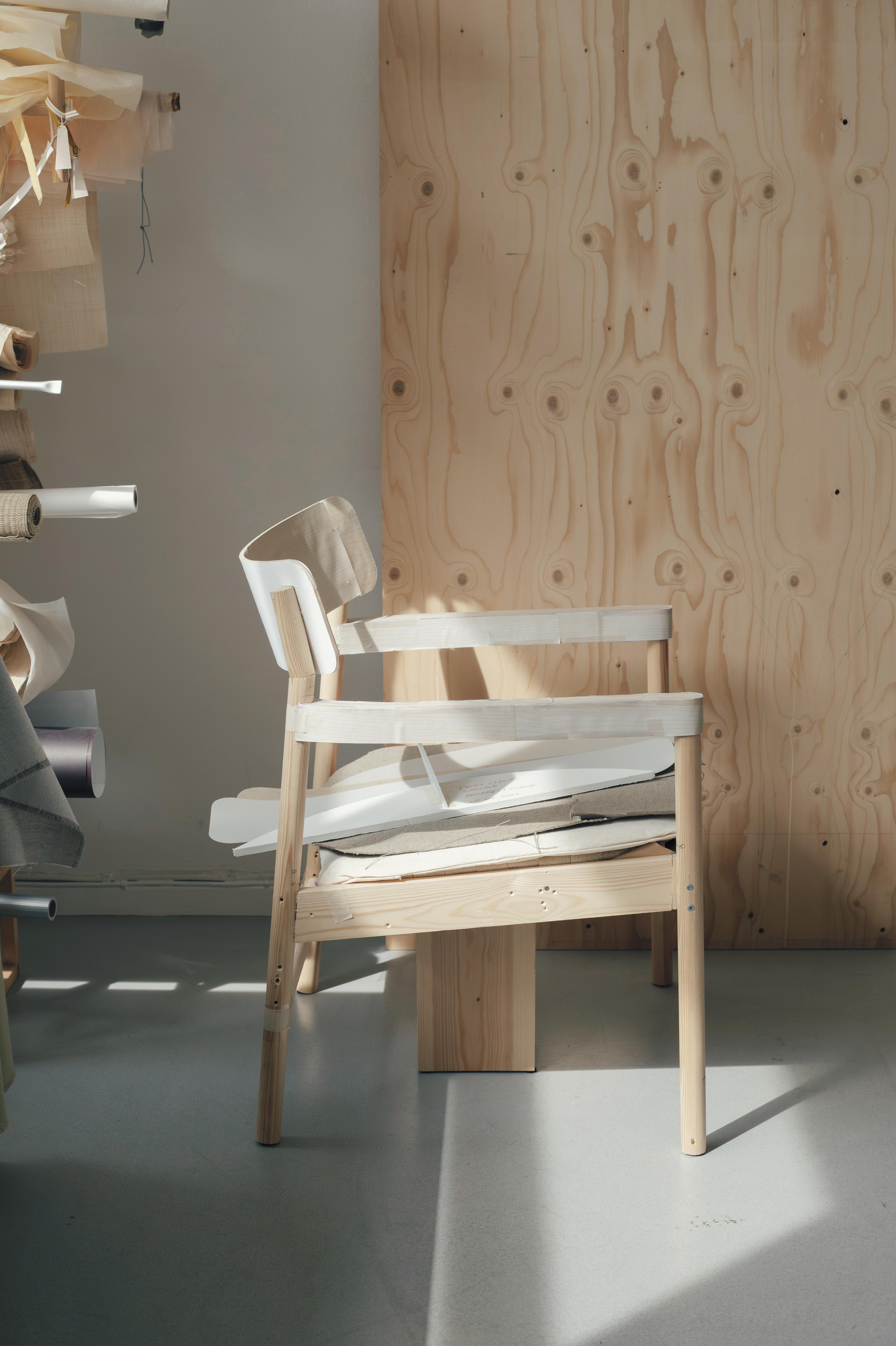
The Post Lounge Chair, Cecilie Manz’s latest addition to the Post collection for Fredericia, is just one example. Spun from the visual language and ideas behind Post Chair, the design process proved less straightforward than simply making the chair wider and lower. “You can’t just copy-paste it,” Manz says. “The new chair has to become an object in its own right, with its own reasons for existing.”
What remained was a certain directness. A timber frame provides the structure; webbing and a loose cushion add softness. Lift the cushion and the entire construction is both visible and legible. “There are really no secrets in that chair,” Manz adds. “There are no awkward details hidden underneath, and very little material doing anything other than exactly what it needs to do.”
Manz describes the result as “super-simplified”. Yet simplicity, in her work, does not seem to mean stripping something down until only an image remains. It is more practical than that. The cushion cover can be changed; if the webbing slackens after years of use, it can be replaced. The chair can be understood, maintained and, when necessary, repaired.
That economy also allows it to remain unusually light for a lounge chair, both physically and visually. Manz questions the idea that comfort necessarily requires volume. “It’s a misunderstanding that in order to sit comfortably, something has to be huge and bouncy,” she says. Get the dimensions and angles right, and far less is needed.
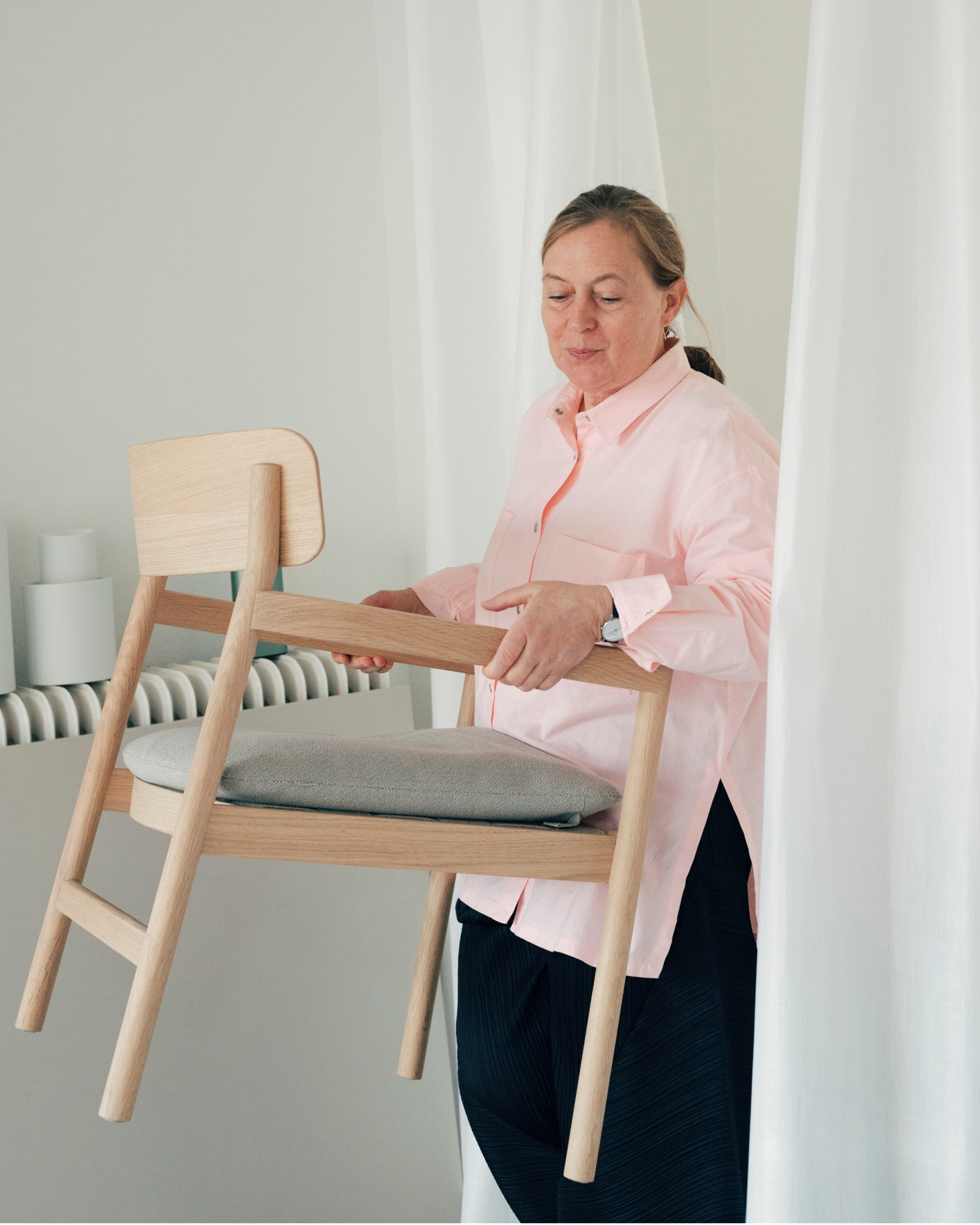
The pared-back nature of the frame also gave Manz an opportunity to push elsewhere. Alongside natural leather and linen, she wanted to “turn up the colour” on the upholstered seat, precisely because there is so little of it. “The chair can take quite a lot,” she says. “Colour is powerful in this context because everything around it remains very clear.”
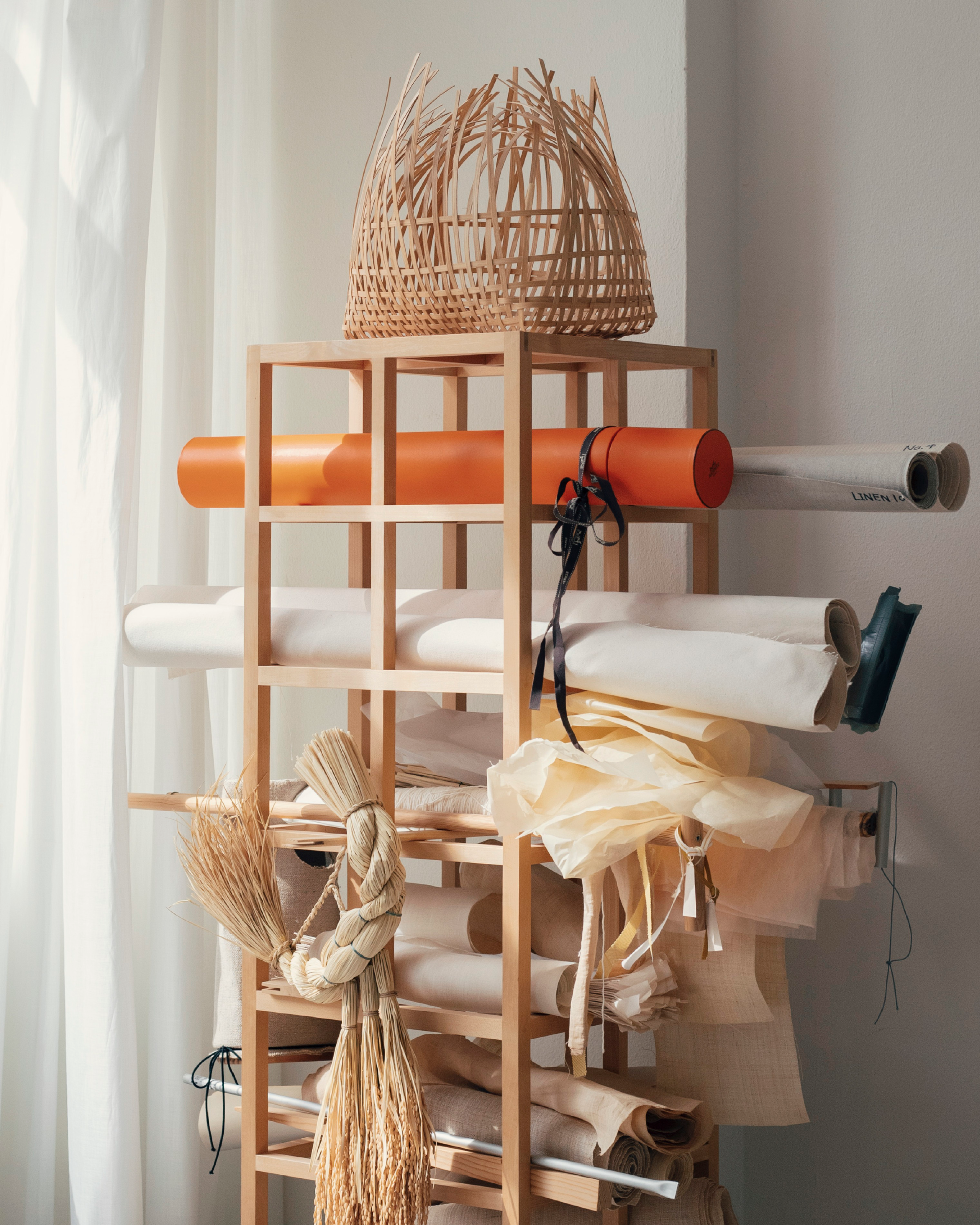
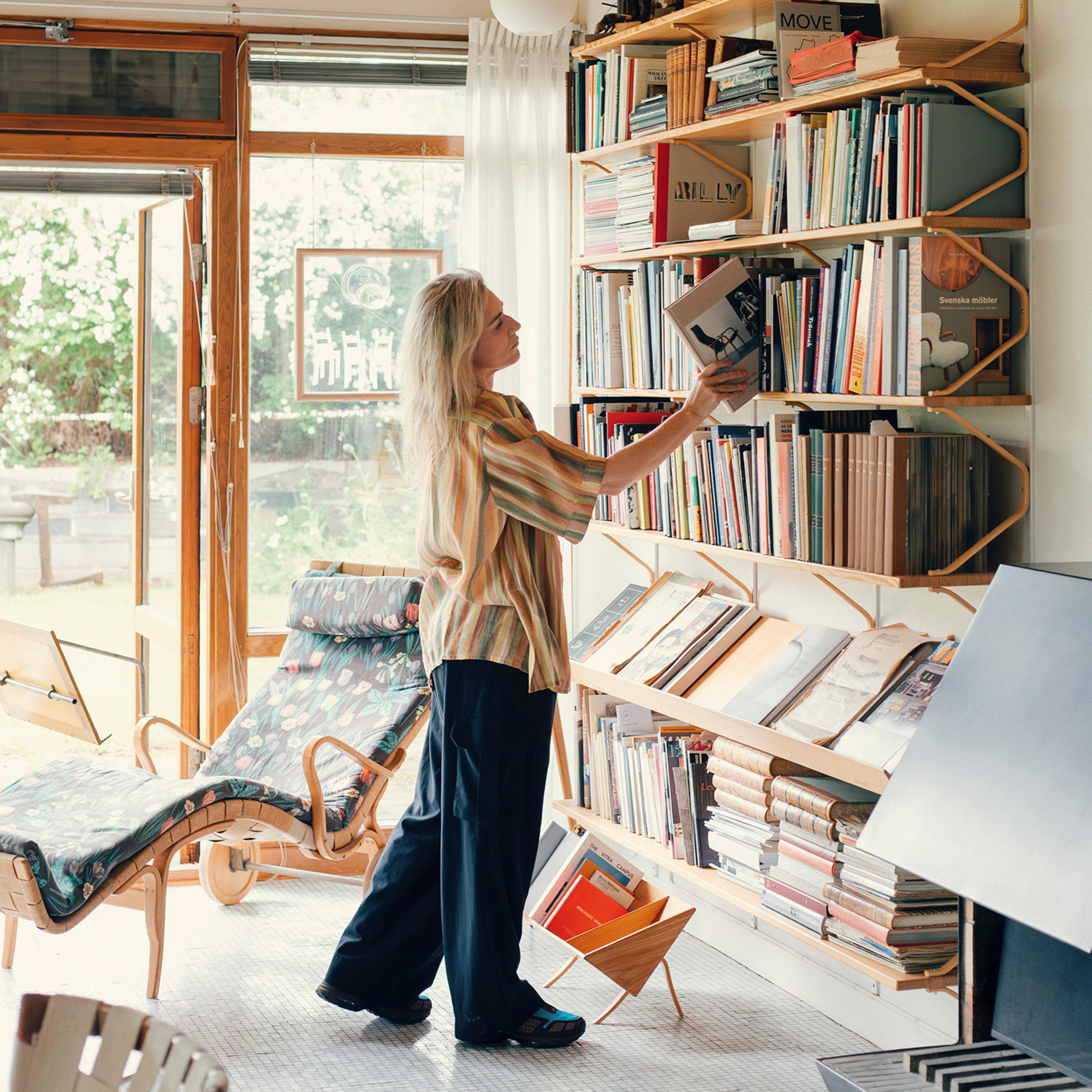
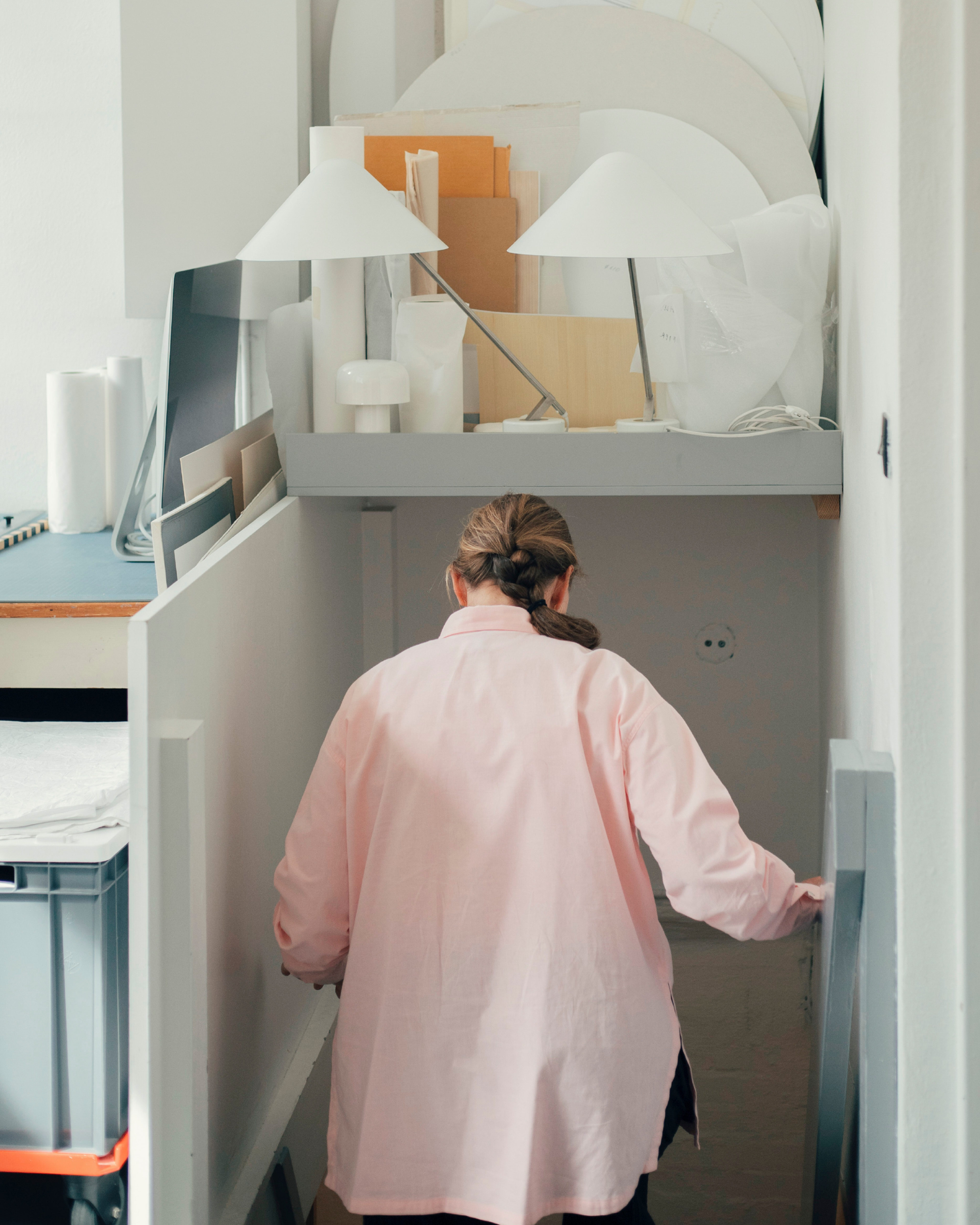
This attention to exactly what an object requires extends to the studio itself. Manz has a habit of seeing the profound in ordinary objects, sometimes assigning them a value that would be easy for someone else to overlook. Everything in the studio matters to her. Objects have been kept, found, brought home or placed there for a reason. Together, they form part of the conditions she needs to work: a particular environment assembled over time, where the things around her carry associations, atmospheres and ideas.
“I have a lot of things that mean a lot to me – that’s the problem. It’s both what you find along the way and what you bring home. I think I tend to assign a lot of value to things. There’s so much to find in them. Maybe it’s simply how I’m wired, but I’m always looking for information in things – or meanings, or whatever it might be,” she reveals.
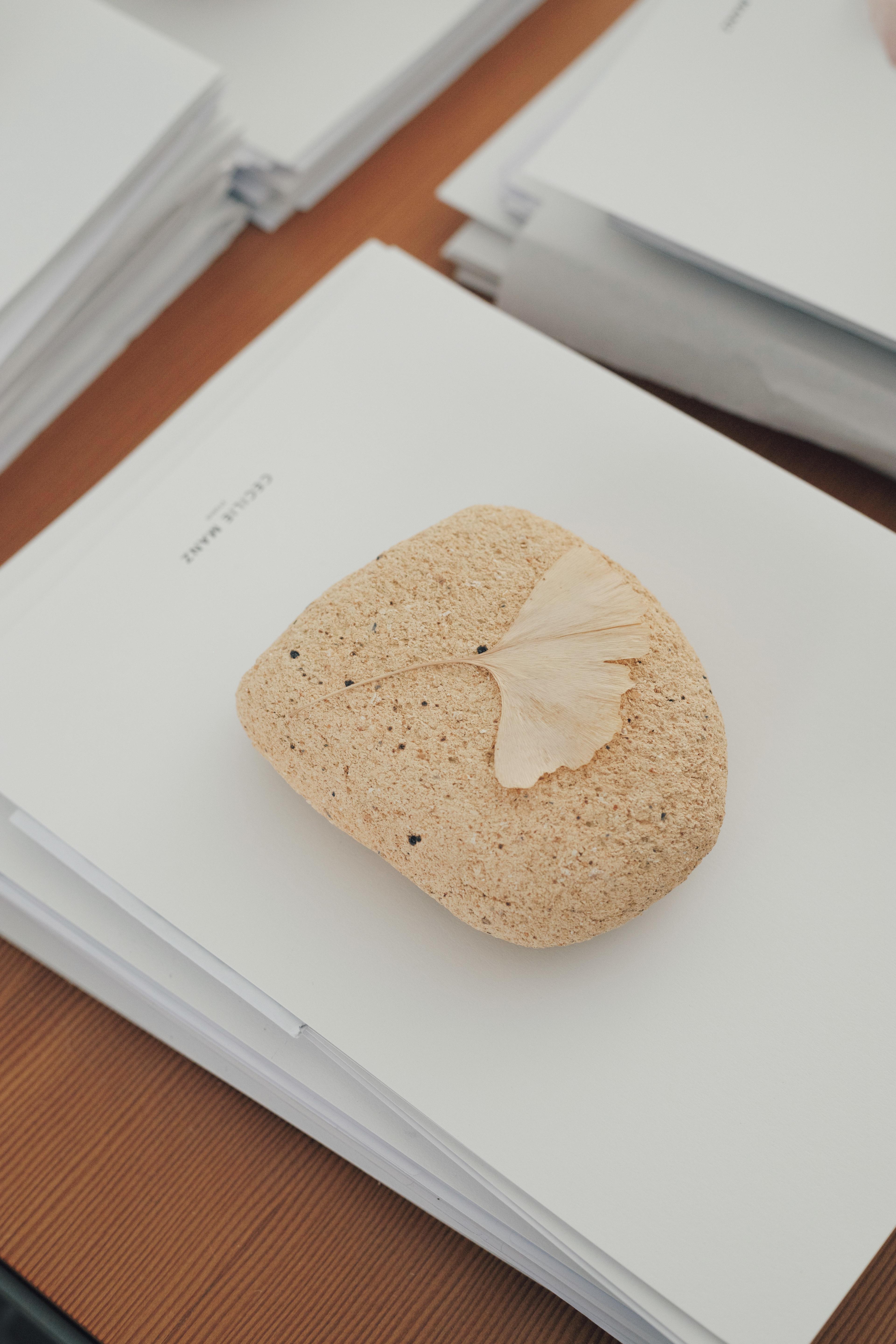
Some are useful, others less obviously so. There is an old brick, found on a beach and worn smooth by years in the sea. Once building waste, its edges and surface have gradually been transformed by water. Manz picked it up and kept it. Nobody intended it to become beautiful, she points out, but to her it had become an object worth looking at. “I see information or meanings in all sorts of things,” she says.


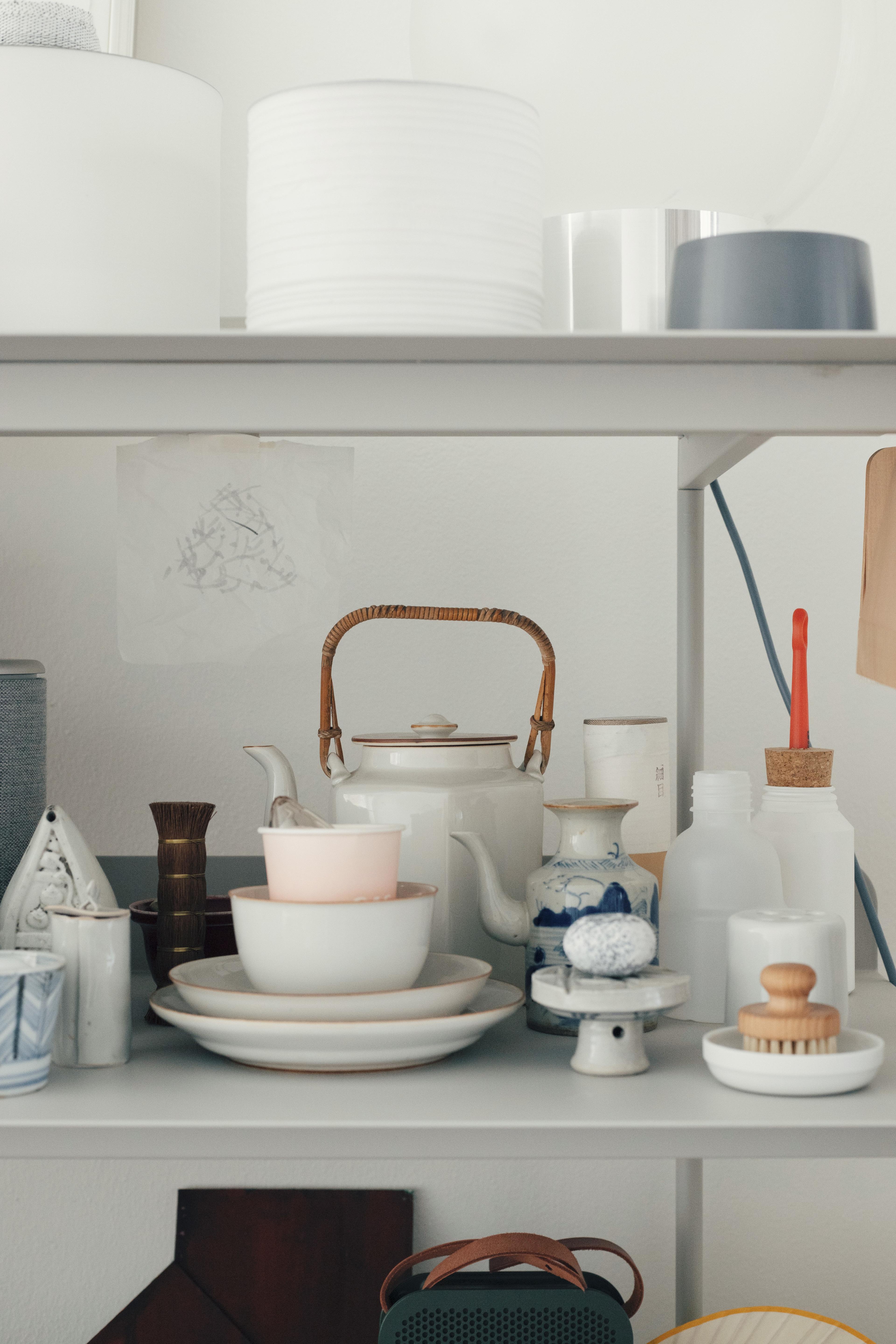
The same perspective and rituals are found at home. Manz admits to owning more than ten wooden spoons—which she admits no one really needs— collected from Japan, Morocco, Mexico, Finland and elsewhere. When cooking, she can spend a little too long deciding which one is right for the particular dish. One has a better shape for a certain task; another simply feels appropriate in the hand. “It’s an aesthetic pleasure for me,” she admits.
The objects are different, but the instinct behind keeping them is similar. Manz is interested in specificity: why one thing works in one situation, how a material behaves under particular conditions, what a proportion allows, how an object acquires meaning through use. It is less a search for inspiration than cultivating and maintaining a habit of paying attention.
That distinction becomes important when the conversation turns to Japan, a country that has been present in Manz’s life since childhood. Her parents, both ceramic artists, lived with the family for a period in Arita, known for its long tradition of porcelain production. At 18, Manz returned alone, travelling through the country with a handful of addresses in her pocket. After a long interval, work began bringing her back regularly, and Japan has remained a recurring presence in her life for roughly two decades.
She is reluctant, however, to translate those experiences into a tidy account of influence. There was no deliberate study of Japanese principles followed by their application to her own work. The process is more subconscious, as things are encountered and absorbed, and sometimes only recognised retrospectively.

If she has to name something that has stayed with her, she returns not to a particular visual language but to an attitude of care. Walking through an ordinary residential neighbourhood in Tokyo, Manz might stop in front of a modest house on a small backstreet. She notices how someone has arranged the entrance, or how an old bicycle continues to be repaired and used. “There is so much care in the way people look after what they have,” she says. A struggling plant is not immediately replaced but watered, supported and kept going. “You wouldn’t dream of just buying a new one and throwing it away.”
That same attitude appears to her in craft. Looking at textiles, ceramics and everyday utensils, she sees ingenuity shaped by limitation. If a maker had only two colours, those two colours were used as fully as possible. If a loom could produce cloth only to a certain width, that condition became part of how the finished object was made.

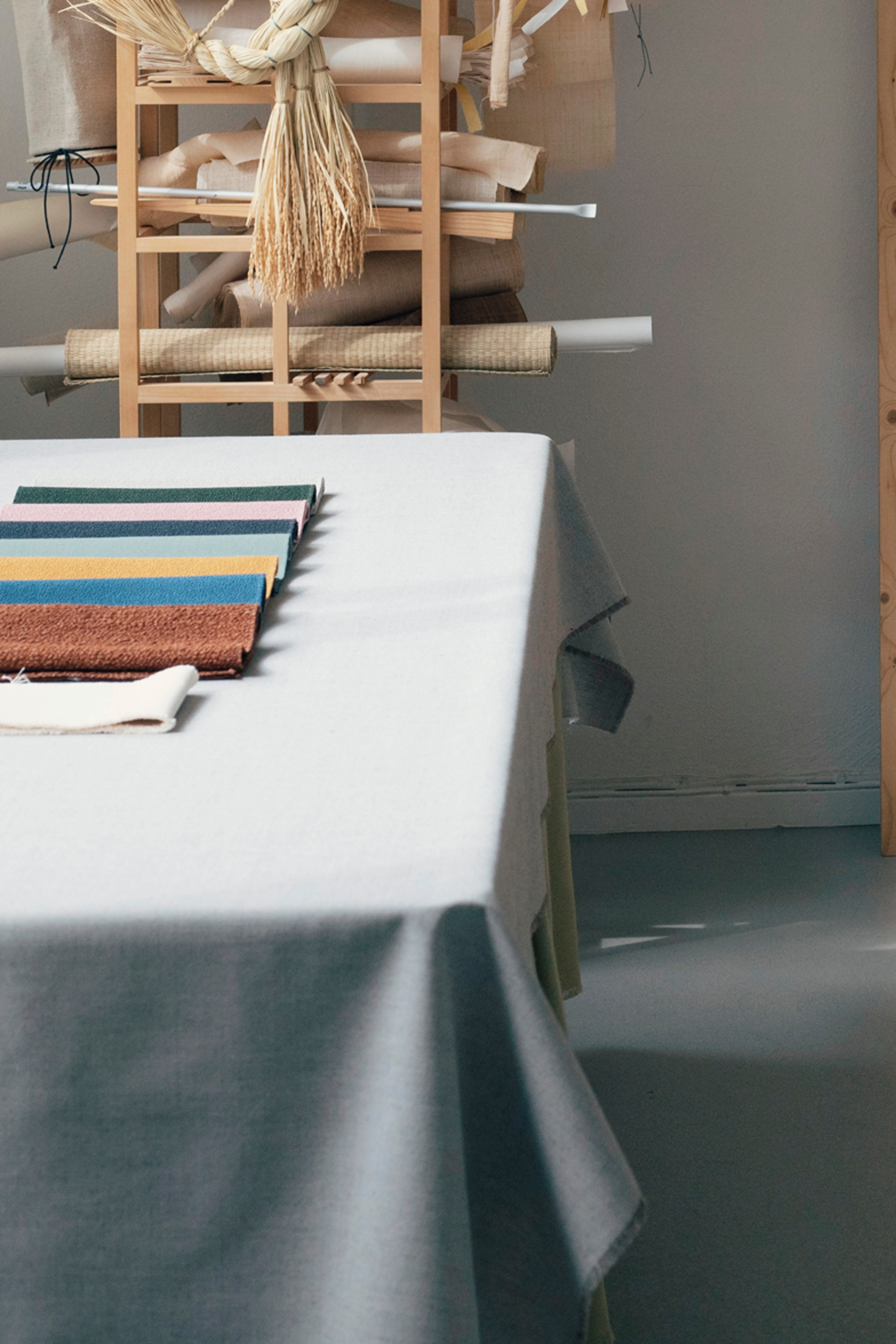
Manz uses the Danish word nøjsomhed: an idea somewhere between frugality, moderation and making the most of what one has. But she is quick to point out that this is not exclusively Japanese. Similar conditions shaped Nordic craft traditions and early Danish design. “Resources were not infinite, so materials had to be used intelligently. The ambition was still to make something beautiful, but without requiring excess,” says Manz.
It is tempting to see the Post Lounge Chair through that lens. Manz herself would probably resist too neat a conclusion. Her references do not operate as a catalogue of principles, and the things around her do not necessarily become designs. They accumulate instead: observations, objects, memories and small pieces of information that may or may not resurface somewhere else.
Perhaps that is the more useful way to understand her studio: a place for looking closely at things and seeing clearly what they might contain.