

Quiet Waves: The Thoughtful World of Teruhiro Yanagihara
At the heart of Teruhiro Yanagihara’s world is a quiet conviction: that design should be felt before it's understood. His studio, TYS, isn’t shaped by trends but by a pursuit of resonance, creating objects and spaces that linger in the senses long after they’re seen.
Since founding the studio in 2002, Yanagihara has brought together interiors, products, graphics and textiles into a distinct language of emotional clarity. Rather than working with categories, he’s interested in experience. A teacup, a room, a scent: each becomes an invitation to pause, to remember, to feel. The work is precise and modern, yet rooted in something timeless and tenderly human.
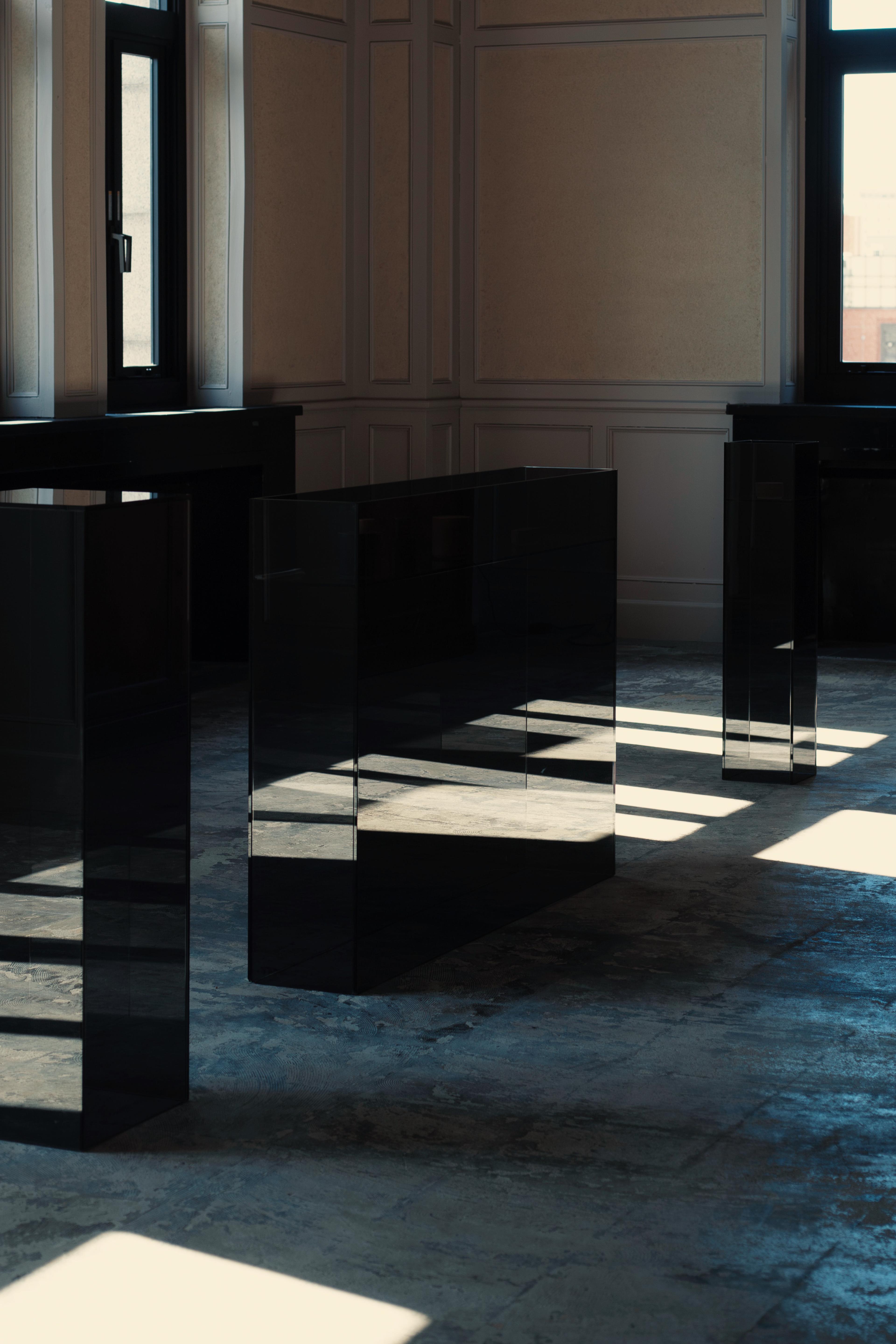
This philosophy comes alive in Vague, the studio’s café and creative outpost with locations in Kobe, Japan and Arles, France. Housed in heritage buildings, it is both laboratory and refuge, where light, material and atmosphere come together. Here, design unfolds through food, conversation, collaboration and the gentle flow of people and light. It’s not a space designed to impress, but one to slowly inhabit.
To step deeper into this world, where design is more sensation than statement, we spoke with Teruhiro Yanagihara about the ideas and instincts behind his work.
Set within Vague, his ever-evolving space, our conversation traced the invisible layers that shape everything: from the placement of a chair to the way light is allowed to linger on a wall.
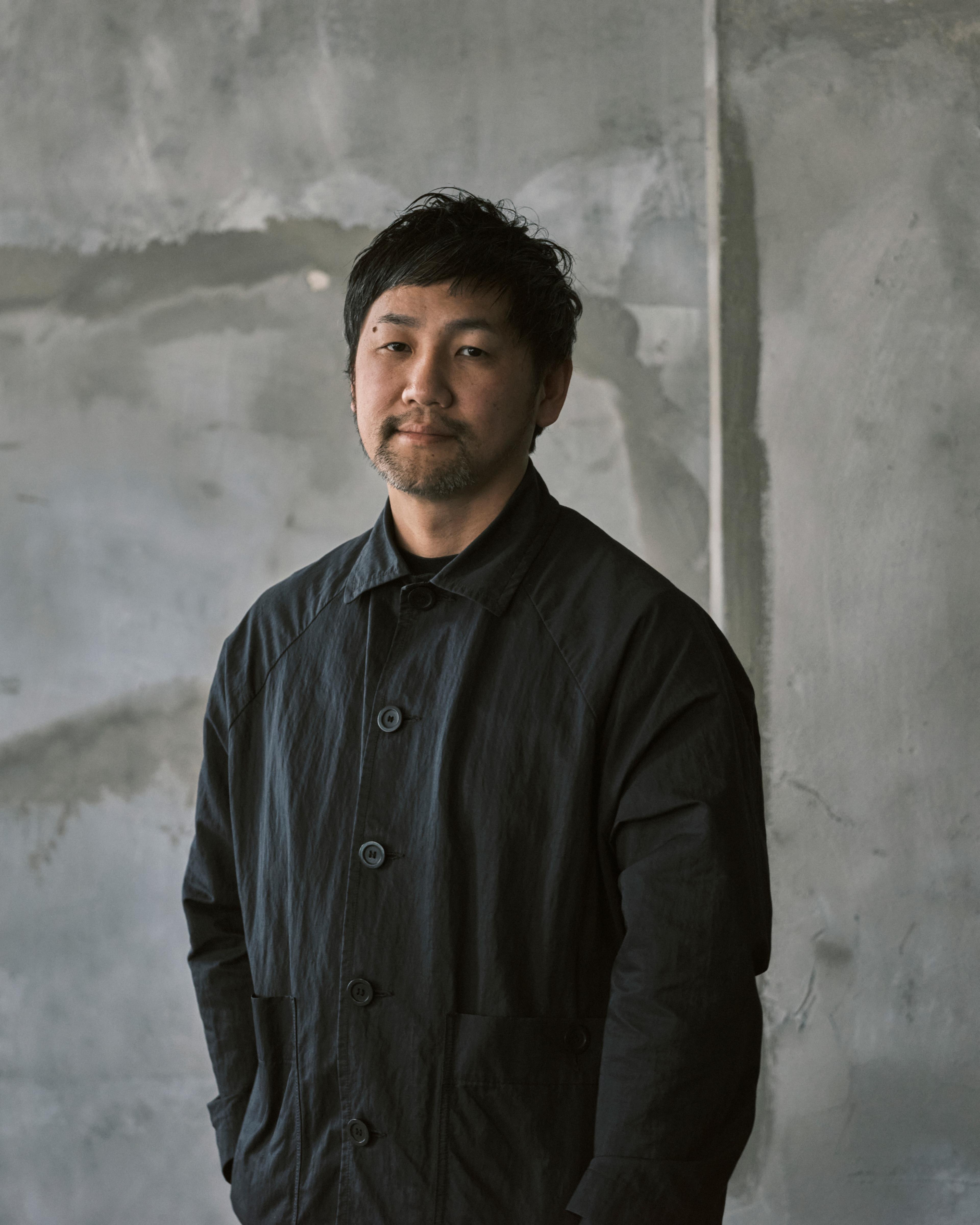
How do you develop a project from an initial idea to a final design? Is there a particular methodology or set of principles you rely on?
Teruhiro Yanagihara: In all of our work, we begin with historical and cultural research, carefully examining each project through both Western and Eastern perspectives. We delve deeply into materials and techniques, engaging in thoughtful dialogue with master craftsmen to pursue originality in every detail.
We always consider whether a story is embedded within the work. Another important guiding principle is whether the local people and the craftsmen involved are positively transformed and find happiness through the project.
How do elements like light, texture and spatial flow guide emotional responses and interactions in your spatial designs?
TY: A space is more than what meets the eye. It is more than walls, floors or furniture. It is shaped by the invisible: the quality of the air and the atmosphere it holds. True spatial design engages all the senses, bringing sight, scent, sound and touch together to create an experience. We believe in designing with intention for every sense, creating environments that are not just seen but deeply felt.


How do you balance the cultural influences of Japanese and Scandinavian design in a space like Vague?
TY: We pay close attention to elements such as light, texture, the sense of distance between people and overall comfort. The commonalities between Japanese and Scandinavian design naturally begin to emerge. There is no need to force a blend; their sensibilities already speak a similar language. It is in this shared sensitivity that we find our inspiration.
Vague is described as a “laboratory for experimental ideas.” Can you share an example of a project or installation that embodies this experimental approach?
TY: We consider food to be one of the essential elements within a space.
At VAGUE, we’ve integrated a kitchen into the very heart of the space. VAGUE kitchen serves as a dining and event area, from casual gatherings to rooftop experiences, where chefs and producers are invited to create memorable moments. Through food, we cultivate dialogue, hospitality and connection, all of which are, in themselves, expressions of thoughtful design.
Vague is said to “flow organically” between harmony and disruption. How do you define this balance, and how does it manifest in the space?
TY: VAGUE means “wave”, a name that reflects the essence of the space. At VAGUE, relationships are not fixed; they ebb and flow. Harmony and disruption emerge in quiet cycles rather than being deliberately prescribed. People are drawn to the space, and eventually, they drift, not with intention, but as part of the rhythm that VAGUE itself seems to hold.
How do you balance experimentation with functionality in a space that hosts diverse creative disciplines?
TY: Our philosophy centers around designing the conditions for design. Each project begins with curiosity rather than a brief. Most of our work is not commissioned, but initiated by our own questions. Through research and prototyping, we explore possibilities, refining and testing ideas until the right moment reveals itself. From this process, functionality emerges as a consequence of thoughtful inquiry.
The Kobe location is housed in a former bank building from the 1930s. How do you preserve the building’s history while introducing contemporary design elements?
Through historical research, we choose materials and techniques that carry memory, connecting the past to the present through texture and touch. In one project, we removed traditional doors and introduced new partitions to transform what had been a collection of closed rooms into a space that was gently divided, yet remained unified. The boundaries became softer, while the sense of cohesion grew stronger.
As architect Le Corbusier described in his concept of promenade architecture, space unfolds through movement. One space leads naturally to the next, creating a seamless sequence that evokes emotion. It becomes a journey through architecture, creating a richer, more resonant experience.

Your work is known for its attention to the invisible qualities of a space. Can you elaborate?
TY: As previously mentioned, we design with a constant awareness of what is not immediately visible. In a restaurant setting, for example, this means creating a space where comfort is felt intuitively. Where the distance between people allows for warmth, where faces glow with ease. Every detail is designed with care, from the flow of movement before the meal arrives to the quiet comfort of the restroom. Like a film, we consider even the most fleeting moments because every scene matters in shaping the experience.
In Vague, there seems to be a strong connection between craftsmanship and locality. How do you approach sourcing materials, and what role does local context play in your design decisions?
TY: Craftsmanship and technique transcend time and geography. Take Arita porcelain, for example. While rooted in Japan, it carries influences from Korea, China, the Netherlands and even Scandinavia. When we carefully examine a region and its history, we begin to understand not only the techniques that were practiced, but also the materials that shaped its culture.
Just as pasta from a specific region evolves in form to suit the local tomato, the right materials and methods become clear through thoughtful investigation. When we trace the lineage of a craft with care, the most fitting choices reveal themselves naturally and with purpose.


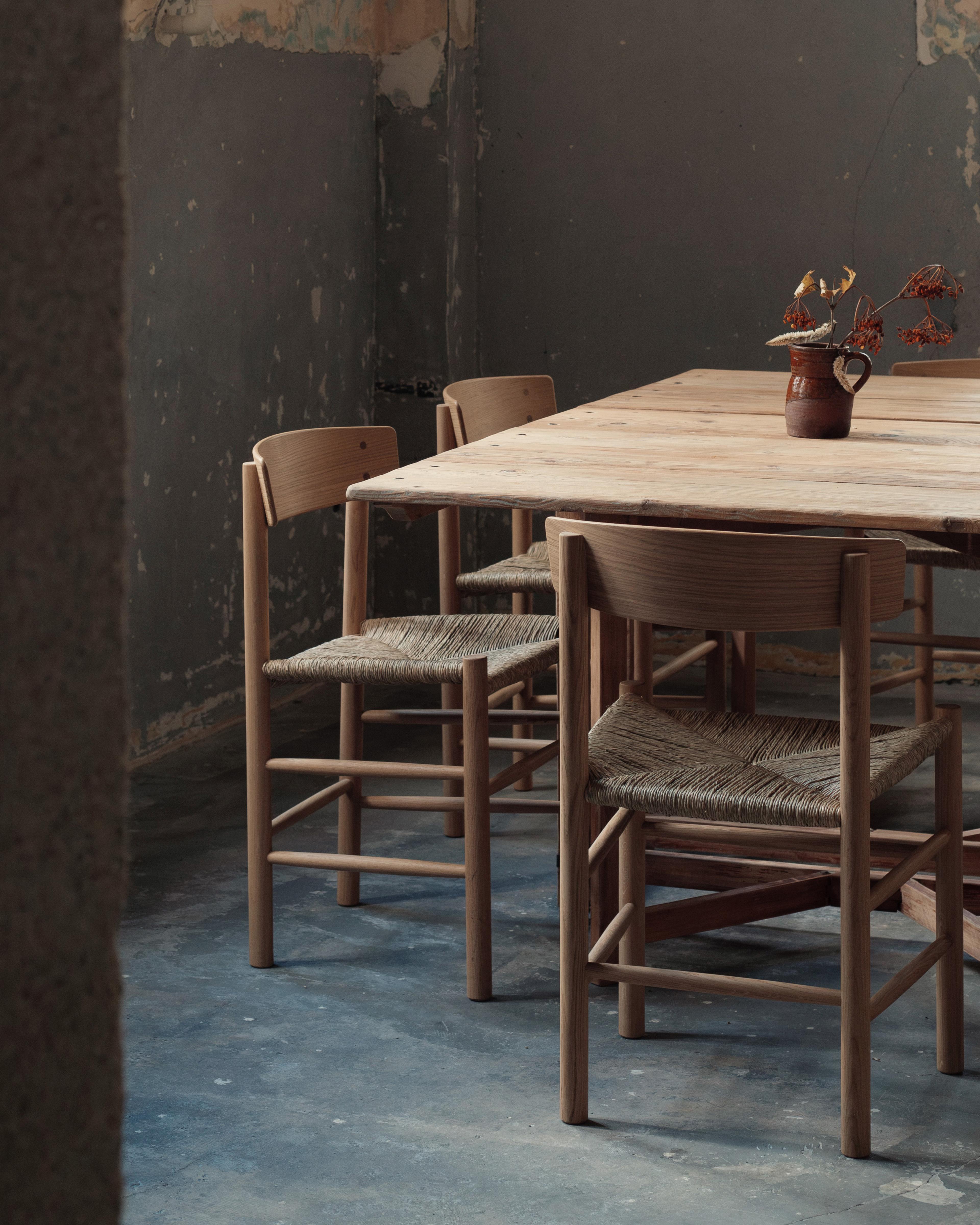

Børge Mogensen's furniture features prominently in your space. How does his philosophy of simplicity and functionality align with your vision of creating spaces that promote emotional resonance?
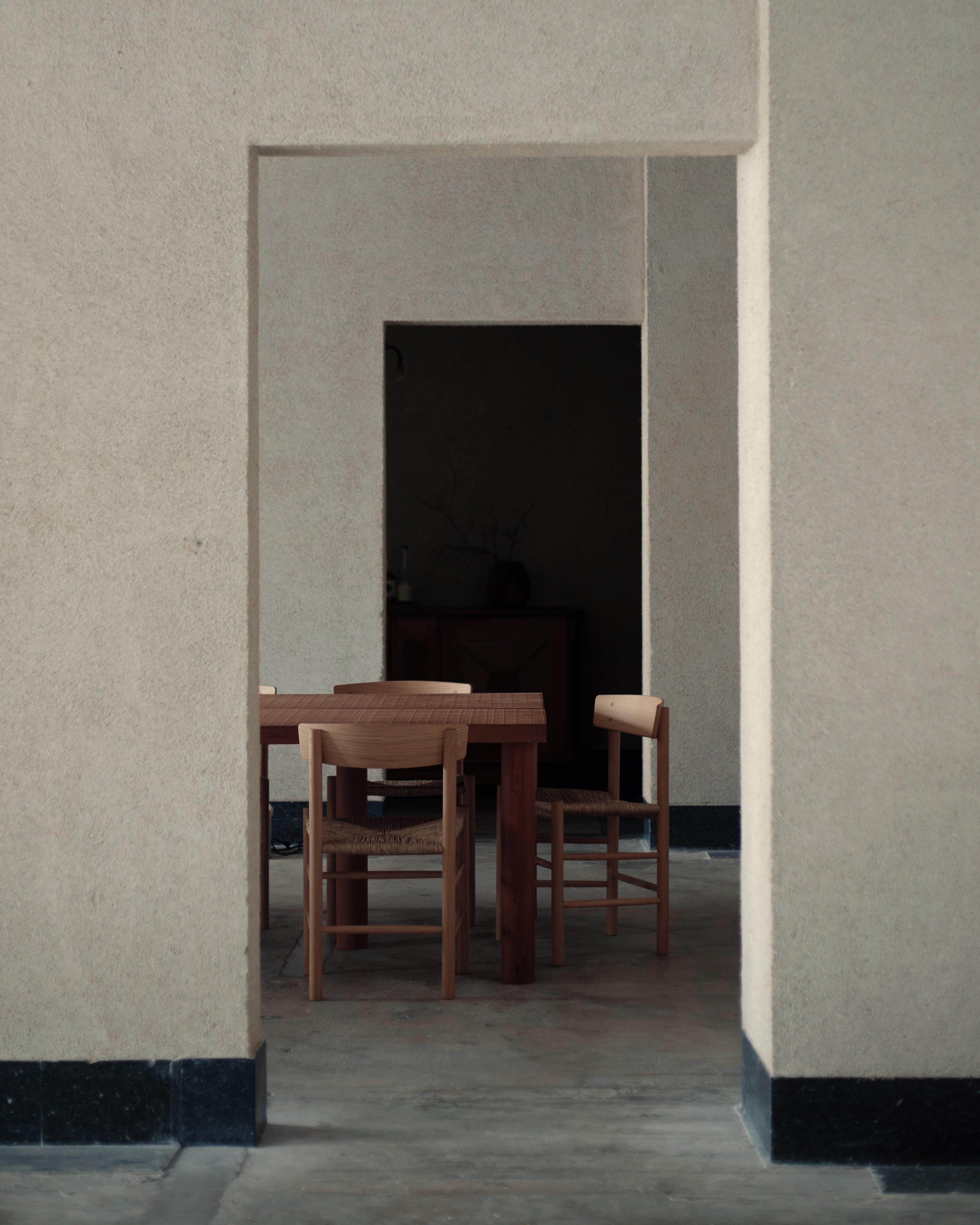
TY: What resonates deeply with us about Børge Mogensen’s furniture is that it isn’t driven by trends. Instead, it is shaped by careful observation of everyday life. Through this close examination, the right materials and functions naturally emerge. This reveals a design process grounded in necessity rather than novelty. It’s this sense of timelessness, born from deep understanding, that we find profoundly inspiring.
You have chosen the J39 Mogensen Chair and The Spanish Chair as two of the few furniture pieces in the space. Why did you choose them?
TY: With VAGUE, we wanted to create a space that blends seamlessly into the everyday rhythm of Kobe, while offering a quiet sense of elevation. To achieve this, we chose furniture that embodies both simplicity and function, yet carries a distinct sense of intention. These pieces were placed not as decoration but as companions. They are meant to be used and felt by all those who visit.
You’ve spoken about the warmth of Scandinavian living in your work. How do elements like texture, materiality, and the use of natural materials contribute to creating emotionally connected spaces, especially in the context of both Scandinavian and Japanese influences?
TY: By carefully selecting materials and textures, we allow the space to quietly reflect the changing seasons. A softly rendered plaster wall, for example, reveals the subtle changes in the angle and intensity of light from summer to winter. The everyday richness that is cherished in Nordic culture becomes even more tangible when we are surrounded by natural materials. In these small, sensory moments, we become more aware. More present.
Explore our universe
Through a series of narratives, we explore inspiring spaces, delve into architectural history topics, and explore the essence of good design.
Favourite Reads by Creative Professionals
What fuels creativity? For the friends of Fredericia, literature is a place for reflection, immersion and new ideas.



1 of 6