


Living with Design: Inside a Milanese Casa-Bottega
In a fifth-floor Casa-Bottega in Milan, home and studio are intertwined in a space where every object, from Nanna Ditzel’s Trisse to their self-designed serving trolley, has earned its place.
What we choose to live with can say as much about how we see the world as what we choose to make.
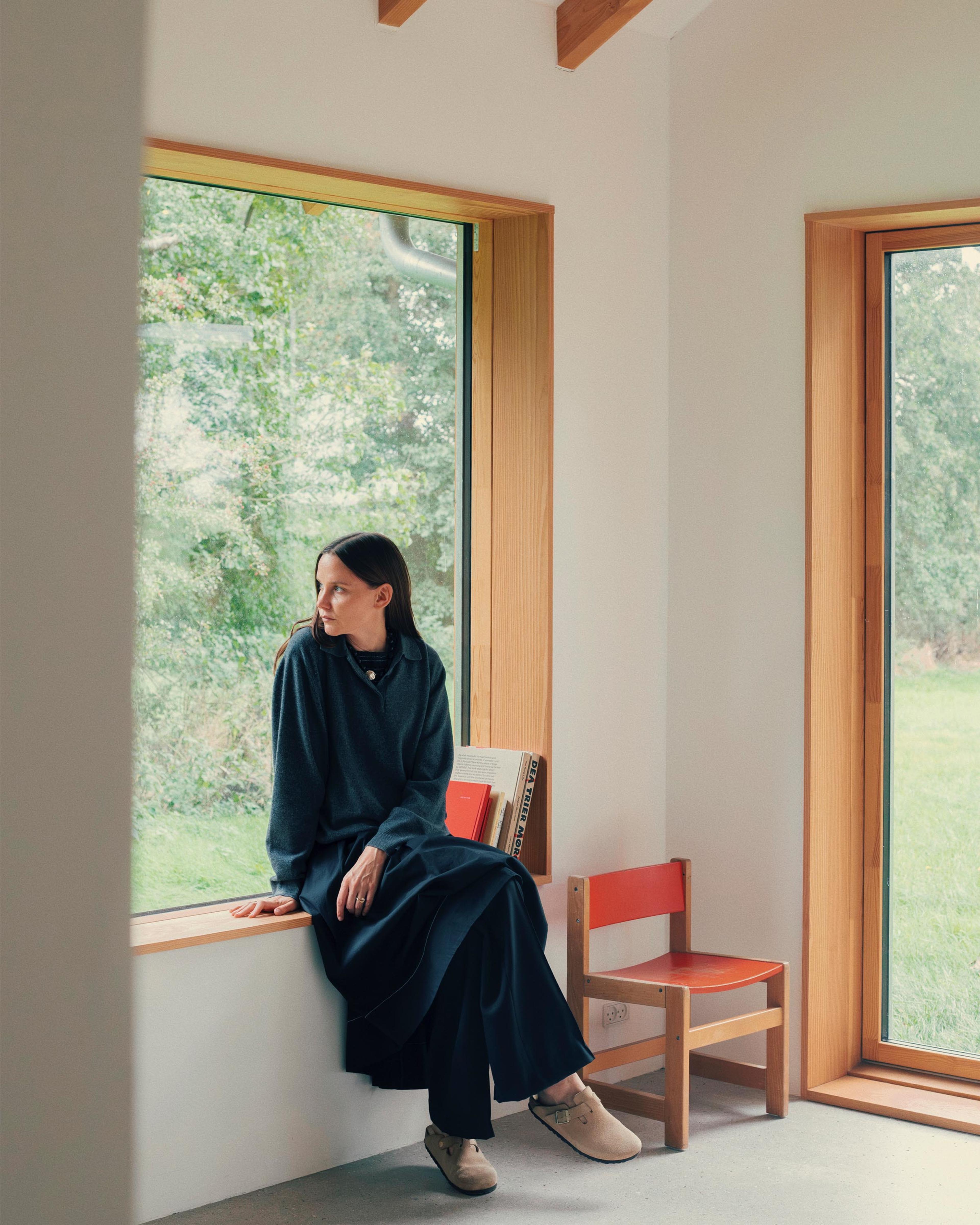
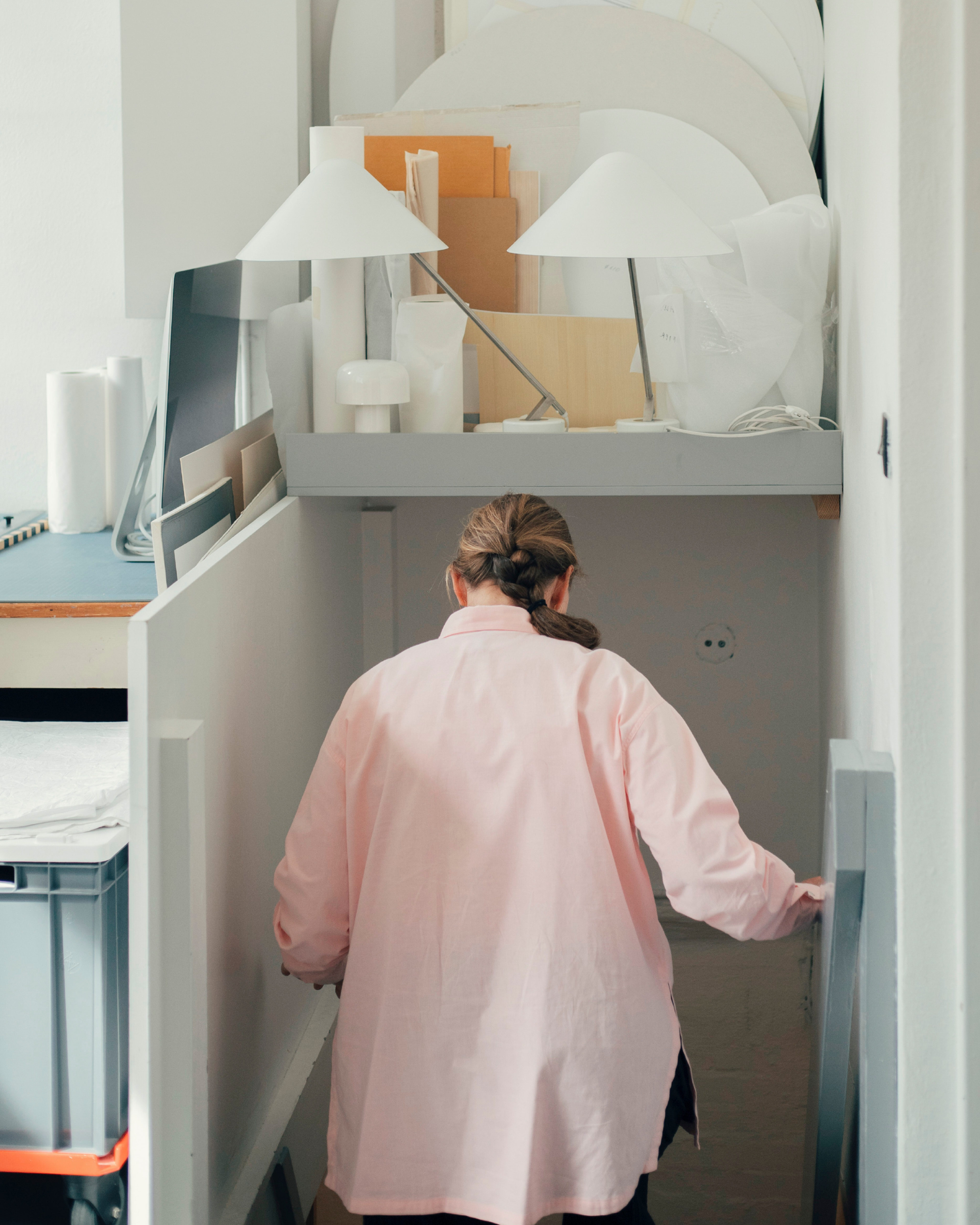
For Letizia Caramia and Morten Thuesen of OLDER Studio, their Milan home, on the fifth floor of a late-19th-century building, is also their workplace, showroom and archive – a Casa-Bottega where furniture, objects, books and references gathered over years of looking and researching sit alongside things they have made themselves.
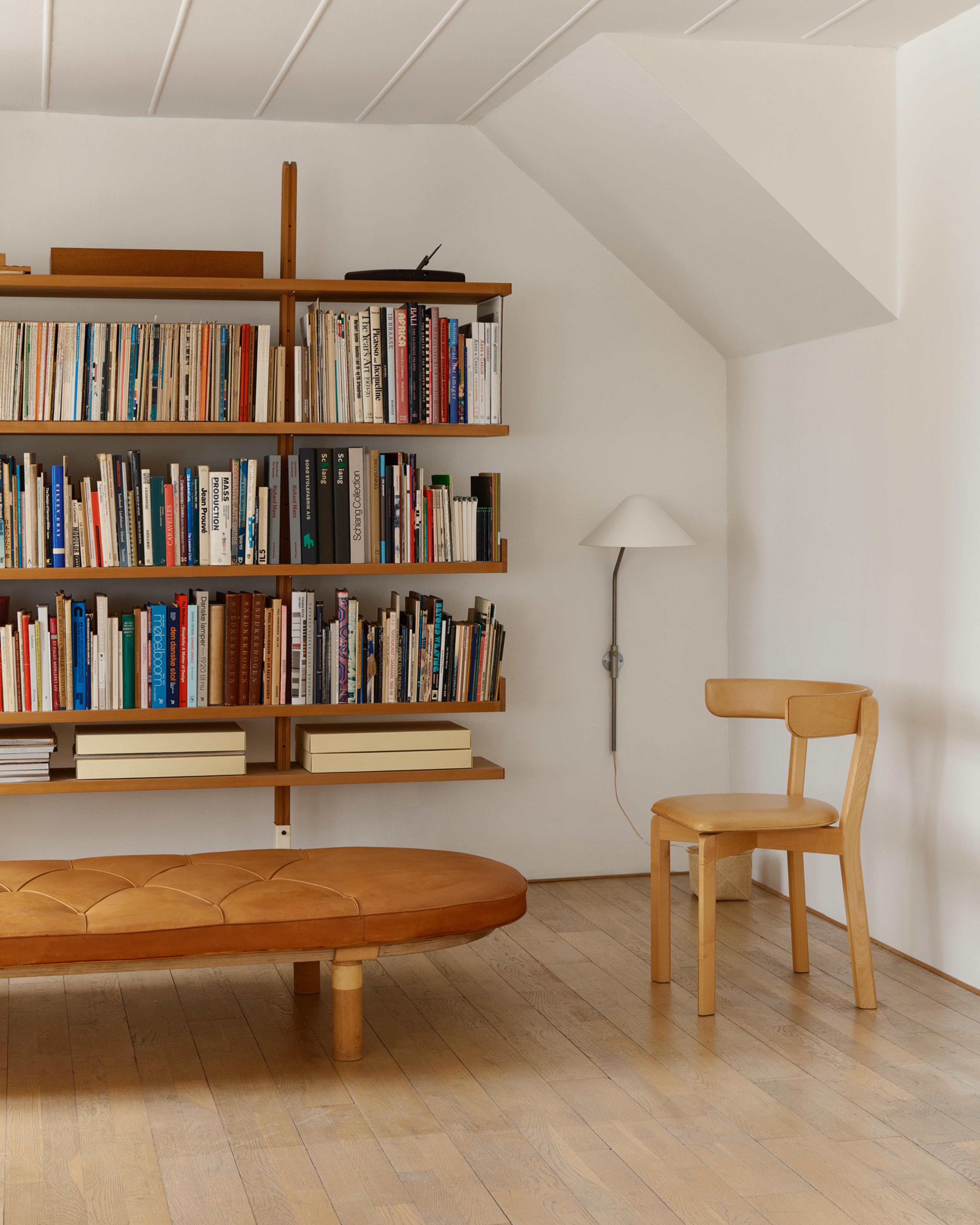
The space has evolved organically rather than according to a fixed plan. A Nanna Ditzel Trisse stool, gifted for their son’s baptism, sits alongside their vinyl collection; their own CAROLINO serving wagon came from a very practical need; and Børge Mogensen’s J39 Chair is admired for the precision and restraint hidden within its simple form.
For Caramia and Thuesen, living with design is another form of research: using things, looking at them closely and understanding what makes an object worth keeping. We visited their home in Milan to talk about collecting, making and the objects that have earned a place in their lives.


Can you tell us a little about your apartment and its surroundings?
OLDER: Originally, we met each other at Alexander McQueen in London, from where we moved to Paris and stayed for nine years. Since 2019, we have been living and working in a late-1800s building located in the surroundings of the Porta Venezia district, in the heart of Milan. The apartment covers the whole fifth floor of the block and spreads over a surface of 300 square metres.
When we arrived from Paris, we were looking for two different spaces, a home and an office. However, when we found this place, we couldn’t help but fall in love with it. The huge space with the fifth-floor placement, located just above the tree line of one of the central streets of the neighbourhood, instantly turned into a love story. Once the space was repainted, we slowly started adding furniture and objects into it, and an organic process initiated.
This space is your home, workshop, and studio. How has the space shaped the way you work – and the way you live?
OLDER: The boundary between work and everyday life is very blurred here, and not just when it comes to uniforms and the interior design aspects of our lives. The studio and apartment, which in Italian is referred to as “casa bottega”, is in many ways autobiographical. It is a place that combines living and working.
The transition between the private apartment and the studio is connected through il salotto, the living room. This creates a natural transition from private to professional, as this room works for presentations for our clients when we are having meetings or fittings for the uniforms, but it also functions just as easily as a private space when the studio is closed.
Uniforms have a corporate nature. We like to think that this setting in our casa bottega creates a more private and intimate impression for the client who visits us, as hopefully they get a different experience purchasing our product that they would not get somewhere else.
The apartment feels carefully composed, yet very lived in. Has it evolved slowly over time, or was there a clear vision from the beginning?
OLDER: The apartment is like a mirror of how we live, work and present an essence composed of organic elements intertwined together. The house and the studio spaces reflect how our philosophy does not only resonate with our professional reality, but also with the private one – where one stops, the other starts.
The way we design spaces is based on an intuitive and curious interest towards historical design, and a lot of research and archive goes into this field. That, mixed with our own designs, which usually come from a need to create what we cannot find.
We have been collecting for several years now, and we have been fortunate enough to find many of the items we love thanks to extensive research carried out back when social media dedicated to interior design had not yet made everything more immediate and more competitive.
There was a time, a handful of years back, where you could find really rare pieces through a hashtag on Instagram, or auctions would sell wonderful pieces for very little. This has gotten more difficult and pricey today.
But the curiosity and personal research within the field was how we actively embarked onto the world of design in the first place. If there were holes in our research, or specific objects we could not find or they were too expensive, we would start making them ourselves, our way.


The apartment is filled with iconic designs alongside unique objects you’ve made yourselves. How do you decide what earns a permanent place in your home?
OLDER: This is very intuitive and very much based on personal research and certain fixations that we have stuck on at specific moments. But the starting point is the Italo-Danish nature of our relationship, private and professional, which functions as a sort of prism for how we research.
We have a love for things that might appear a bit wrong or out of form. To us, being clumsy, when it comes to shape, is not necessarily a bad thing. Actually, it can be a mechanism that diffuses self-importance, which we really appreciate.
We like that an object can look a bit like a friend or something that does not take itself too seriously. Pretentious objects or furniture, to us, can be a bit dull. We like a “kind” design, something that is soft visually or can make you smile.
But the main quality to a domestic space is a sort of visual symmetry through juxtaposition of objects and furniture, that can arrive from many different arenas of design and periods in time. This is key to our understanding of how we wish to live with and make design.
What is the story behind the Nanna Ditzel Trisse stool in your living room? How do you use it?
OLDER: Besides being big admirers of the oeuvre and work of both Nanna and Jørgen Ditzel, in Morten’s family, among his siblings, there has always been a tradition that children’s furniture is gifted at the baptism party of the newborn. When our first son was baptised, we were gifted this vintage Trisse, from the 1970s, which is a precious object in our space in Milan.
It’s extremely versatile and a representation of a “good” design in our book. We use it as a small stool next to our vinyl collection, so scrolling for music whilst having guests is how we associate with the design, which, knowing a bit about the biography of Nanna Ditzel and her love for being social, seems like a good fit.
The J39 Mogensen Chair embodies a simple and functional design approach. What qualities in the chair resonate with your own way of creating?
OLDER: The pure shape, the honest language of the construction. It’s so simple that you almost do not notice it, which is sort of genius. If you can achieve that silent effect, then we really think you have achieved something with a design. We are convinced it requires a lived life; it’s not something you render or draw overnight.
We always loved the fact that Isamu Noguchi had a J39 Chair in his New York studio among his sculptures, we always found this quite inspirational, because it coins many cultural and design streams together in one.
At the same time, studying the J39, you can really learn a lot about how to perfect proportioning. Børge Mogensen was a true master of scale and proportioning, and you can see how the school of Kaare Klint shines through his greatest pieces, whilst still being entirely his own.
Is there an object here that says something about the two of you as people?
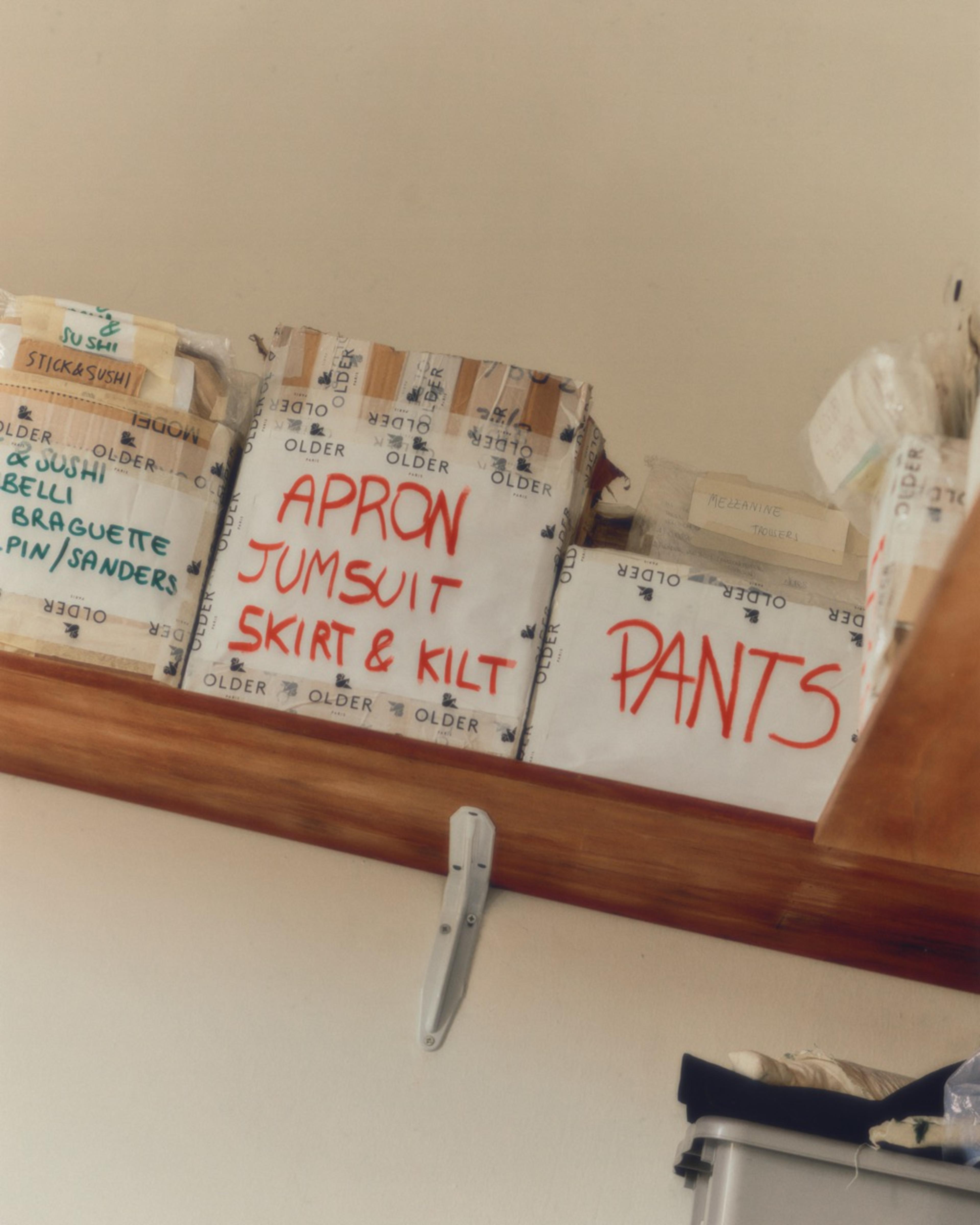
OLDER: Our ‘CAROLINO’ serving wagon, which we designed during the first COVID lockdown whilst visiting Letizia’s parents during Christmas. Her father is an artisan, and as pandemic isolation was a lonely affair, an idea emerged to create a small series of objects that would create company and warmth, a bit like the origin behind Geppetto’s Pinocchio.
We had the concrete need for this wagon, as we both are slow starters in the morning. Being late, we often had to rush from the kitchen to the apartment with our breakfast and coffee, before the studio would open and the employees would come in.
This resulted in the ‘CAROLINO’, which we always felt was a bit like a friend who would come with a plate of food or a drink to you when you needed it – a friend in solitude.




Has living with the things you make changed the way you design?
OLDER: Yes, it totally has. For our uniforms, they are function-driven and rational in their nature. We are given a scheme of logical and practical needs, starting from how they are produced, packed, designed and how they get distributed all over the world.
We always think of them as something we would like to wear ourselves in our daily lives, so that the uniforms our clients operate with are made by somebody who would wear them themselves.
When it comes to our objects, ultimately we design things for ourselves, things that are needed in our studio or private life, so it depends a lot on where we are in life at that given moment.
What does “home” mean to the two of you?
OLDER: In Italian, we refer to our studio in Milan as a ‘Casa-Bottega’, a home studio – so it means just about everything to us.
It’s where we go to work every day, where we realise our ideas, it’s us and our team, it is OLDER Studio.
At the same time, being the space where we raise our children and live, our private and professional lives are completely intertwined. It should not work on paper, but to us, as a couple in both senses, we would not want it any other way.
We feel immensely privileged, being in the centre of the city and running operations as we do. Maybe one day we will build a 2.0 version of this idea, if the studio keeps growing, time will tell.


Explore our universe
From design news to interviews and projects, these are some of our most popular stories right now.
Favourite Reads by Creative Professionals
What fuels creativity? For the friends of Fredericia, literature is a place for reflection, immersion and new ideas.




1 of 6